

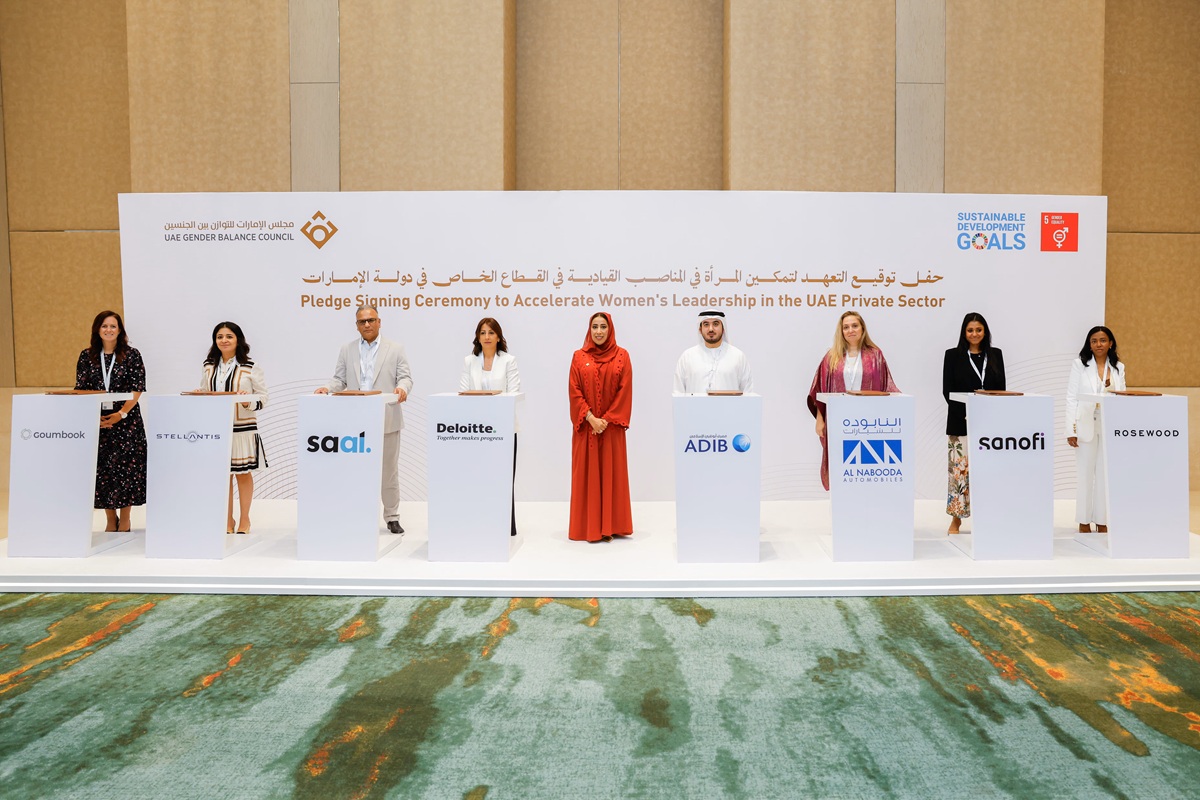
Artificial intelligence, entrepreneurship, workplace culture and future workforce participation are set to play a central role in the UAE’s next Gender Balance Strategy, as policymakers, businesses and government entities work together to shape priorities for the years ahead.
The UAE Gender Balance Council convened a national dialogue bringing together more than 100 representatives from government entities and private-sector signatories to the SDG 5 Pledge to contribute to the development of the UAE Gender Balance Strategy 2027–2031.
The discussions explored how emerging technologies, evolving workplace models and future economic opportunities could influence gender balance policies while supporting sustainable development, quality of life and national competitiveness.
Through interactive workshops and discussion sessions, participants examined major trends shaping the future, including artificial intelligence, the new economy and the future of work.
The dialogue focused on six core pillars that will help shape the Gender Balance Strategy 2027–2031:
- Education, skills and career pathways
- Family, caregiving and shared responsibilities
- Health and wellbeing across the lifecycle
- Leadership and workplace culture
- Entrepreneurship and financial inclusion
- The future economy and artificial intelligence
UAE Gender Balance Council
Participants discussed opportunities, challenges and practical solutions related to each pillar, while identifying the role of key stakeholders in implementing future initiatives.
The national dialogue forms part of the UAE’s collaborative approach to policy development, ensuring that stakeholders are actively involved in shaping future initiatives that support sustainable development and reinforce the country’s competitiveness and global leadership.
The event also served as a platform for exchanging perspectives on economic and social participation, quality of life and future workforce readiness.
Sheikha Manal bint Mohammed bin Rashid Al Maktoum, President of the UAE Gender Balance Council, and wife of Sheikh Mansour bin Zayed Al Nahyan, Vice President, Deputy Prime Minister and Chairman of the Presidential Court, said the new strategy will build on the UAE’s achievements in advancing gender balance through innovative solutions and future-focused policies.
She said: “Gender balance is a fundamental pillar of sustainable development in the UAE and a key driver of national competitiveness, quality of life and the sustainability of our achievements. Guided by our leadership’s vision, we continue to invest in people as the primary catalyst for development and future progress. The Gender Balance Strategy 2027–2031 represents a new milestone in building on the achievements made to date and advancing innovative policies and solutions that strengthen future readiness and further reinforce the UAE’s position as a leading global model in gender balance.”

Eight new organisations join SDG 5 Pledge
The event also marked the addition of eight new organisations to the SDG 5 Pledge:
- Abu Dhabi Islamic Bank
- Stellantis
- Deloitte
- Sanofi
- Al Nabooda Automobiles
- SAAL
- Rosewood Abu Dhabi
- Goumbook
The additions bring the total number of participating companies to 88 national and international organisations operating in the UAE.
According to the UAE Gender Balance Council, the growth in participation reflects increasing private-sector commitment to promoting equal opportunities, supporting inclusive workplaces and advancing national priorities.
Mona Ghanem Al Marri, Vice President of the UAE Gender Balance Council, said: “Over the past years, the UAE has established a strong foundation for gender balance through progressive legislation, broader participation in decision-making, and stronger partnerships between the public and private sectors. These efforts have helped embed gender balance as an institutional approach across sectors.
“The next phase will build on these achievements to drive tangible impact in workplaces, support participation, career progression and leadership, and strengthen institutional readiness for the future economy.
“Gender balance is not a peripheral issue, but a fundamental pillar for building stronger institutions, a more competitive economy and a more cohesive society. Through this national dialogue, we aim to bring together diverse expertise and perspectives to identify national priorities and develop innovative, actionable initiatives that translate ideas into tangible outcomes supporting the UAE’s development goals.”
Quality of life and workplace support
Mouza Mohammed Al Suwaidi, Secretary General of the UAE Gender Balance Council, said the strategy adopts an integrated approach that links economic and social development with quality of life while enhancing readiness for future transformations.
She said: “Supportive workplace environments are essential to strengthening family stability and enabling individuals to balance their professional and family responsibilities. This contributes positively to quality of life, productivity and long-term social sustainability.”
The UAE Gender Balance Council also announced the opening of nominations for the Family-Friendly Workplace Award 2026, launched by Sheikha Manal bint Mohammed bin Rashid Al Maktoum as part of the Year of Community 2026 initiatives.
The award is open exclusively to organisations that are signatories to the SDG 5 Pledge and recognises companies that have translated their commitments into practical policies and workplace practices that support families, promote work-life balance and contribute to sustainable institutional and societal impact.
The Council said the outcomes of the national dialogue and the growing number of participating organisations reflect a shared commitment to advancing gender balance, strengthening future readiness and enhancing the UAE’s global competitiveness.
