

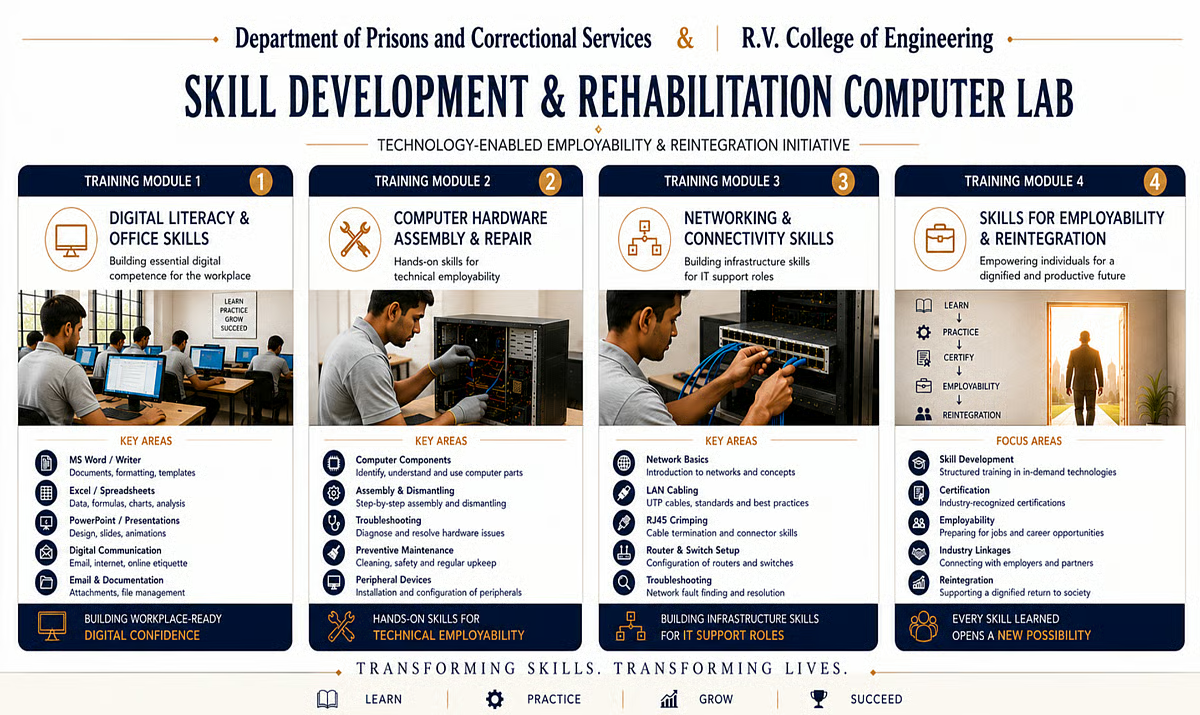
A Structured 4-Week Skill Training Program
A carefully designed 4-week intensive training programme has been planned for inmate batches, with each session spanning 3 hours, emphasising practical exposure, hands-on learning, and employability-oriented competencies.
The training modules include:
-
Computer Hardware Assembly and Troubleshooting: Participants will gain a foundational understanding of computer components, assembly procedures, preventive maintenance, diagnosis of common hardware failures, and basic repair methodologies.
-
Basic Networking and Digital Infrastructure: Training will introduce networking fundamentals, cable identification, internet basics, LAN concepts, routers, connectivity, and practical troubleshooting skills relevant to workplace environments.
-
Office Productivity and Digital Literacy: Hands-on training in office productivity tools will cover document preparation, spreadsheets, presentations, digital communication, file management, and workplace-ready digital practices.
-
Desktop Publishing and Creative Communication: Participants will be introduced to tools such as GIMP, Inkscape, and Scribus to develop practical skills in poster design, document formatting, brochures, invitations, and creative communication materials.
The pedagogy is intentionally practical, activity-based, and confidence-oriented, with an emphasis on self-learning, peer support, and applied exercises.
Beyond Bengaluru: Open Prison, Devanahalli
The collaboration also envisions impactful interventions at the Open Prison at Devanahalli, a correctional ecosystem uniquely positioned for rehabilitation-oriented experimentation.
With substantial land resources and an environment conducive for productive engagement, the Open Prison presents opportunities for technology-enabled livelihood generation, vocational skilling, and sustainable rehabilitation models.
RVCE proposes to work collaboratively on initiatives involving:
-
Digital literacy and skill training
-
Computer education and technology orientation
-
Sustainable agriculture and protected cultivation exposure
-
Precision farming and IoT-enabled livelihood models
-
Entrepreneurship and market-linked skill development
-
Innovation-driven social rehabilitation activities involving students and faculty
Such interventions are expected to create scalable models for inmate empowerment that combine dignity, productivity, and rehabilitation.
A Model for Nation Building Through Compassionate Education
The RVCE–Karnataka Prisons and Correctional Services Department collaboration reflects a powerful idea: education must reach where it is needed the most.
When institutions of higher education extend their expertise beyond classrooms into correctional spaces, the outcome is not merely training—it is transformation.
This initiative stands as a meaningful example of how engineering institutions, prison systems, judiciary, industry partners, and civil society can work together to create opportunities for individuals seeking a second chance.
For many inmates, access to digital skills, technical competencies, and constructive mentorship may become the difference between social exclusion and reintegration; between uncertainty and livelihood; between punishment and reform.
At its heart, this initiative is not only about computers, training modules, or infrastructure. It is about restoring confidence, nurturing human potential, and reaffirming a fundamental belief—that every individual deserves an opportunity to rebuild life with dignity.
