

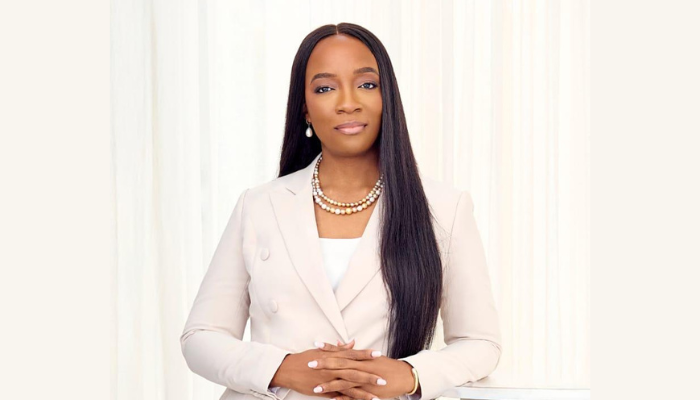
Kemi Ojenike has emerged as a leading voice on wealth preservation and generational legacy. As Chief Operating Officer of Meristem Family Office, she advises high-net-worth families on estate planning, family governance, risk management, and sustainable wealth structuring. A trained lawyer and Chartered Governance Professional with the Chartered Governance Institute UK & Ireland, Kemi combines legal expertise with strategic insight into family wealth management. Beyond finance, she is also co-founder of The Destiny Trust, a non-profit organisation supporting vulnerable children through education, shelter, and empowerment initiatives. In this interview with KENNETH ATHEKAME, she spoke on why structured wealth creation remains limited in Nigeria, the mindset shifts required for long-term prosperity, and how families can build wealth that survives across generations. Excerpts:
Can you share your journey into wealth creation and what shaped your financial philosophy?
My journey into wealth creation started from observing people and patterns. I noticed that many intelligent and hardworking individuals earned good incomes, built businesses and acquired assets, yet still felt financially anxious or unprepared for the future.
At the same time, I saw families with significant resources struggle with trust, succession, communication and preserving what truly mattered to them. That experience shaped my understanding that wealth is much broader than money or visible assets.
Over time, I came to define wealth as something more complete. It includes financial capital, but also relationships, health, values, reputation, peace of mind and the wisdom to sustain success across generations.
My work has therefore focused on helping people build what I call “Complete Wealth” a life where financial resources, wellbeing and human relationships work together.
How has navigating Nigeria’s economy influenced your approach to building wealth?
Nigeria teaches resilience very quickly. Inflation erodes savings, policies change unexpectedly and uncertainty often becomes part of daily life.
In that kind of environment, wealth building cannot depend on one income source or one asset class. It requires adaptability, diversification and long-term thinking.
The Nigerian experience also teaches that emotional stability matters financially. Many people make poor decisions from fear, panic or short-term pressure. Building lasting wealth here requires discipline, patience and the ability to stay steady during unstable periods.
Why do you think structured wealth creation remains limited in Nigeria?
A major reason is that survival consumes attention. When people are under constant financial pressure, most of their energy goes into solving immediate problems rather than planning for the future.
There is also a significant knowledge gap. Many Nigerians were taught how to work and earn income, but not necessarily how to convert income into assets, investments and systems that create long-term security.
Trust is another factor. Many people have lost money through scams, failed investments or weak institutions, which pushes them into short-term cash flow living instead of structured wealth building.
How would you define wealth creation in the Nigerian context?
In Nigeria, wealth creation means building assets, systems and capabilities that can survive uncertainty.
It involves moving beyond dependence on active income and gradually creating businesses, investments, skills, networks and intellectual property that generate value over time.
But wealth creation must also extend beyond finances alone. If a person builds financial wealth but loses their health, family stability, values or peace of mind in the process, then something important is missing.
True wealth includes protecting health, preserving family unity, raising capable children and building a reputation people trust.
What structural barriers make wealth creation difficult for average Nigerians?
Inflation remains one of the biggest obstacles because it weakens savings and makes long-term planning harder.
Access to affordable capital is another challenge. Many Nigerians have viable ideas and strong work ethic, but lack financing and institutional support to scale.
Policy inconsistency also creates uncertainty for businesses and investors. Beyond that, Nigeria still needs stronger financial literacy, more reliable institutions and broader access to productive investments.
Despite Nigeria’s entrepreneurial culture, why does wealth creation remain limited to a minority?
Entrepreneurship and wealth creation are not always the same thing.
Many businesses function mainly as income engines rather than wealth engines. They depend entirely on the founder, have weak systems, low margins or no reinvestment strategy.
A person can stay busy every day without actually building long-term wealth. Sustainable wealth creation requires structure, governance, scalability and the ability to convert effort into assets that grow beyond daily labour.
What mindset shifts are necessary for people moving from income earning to wealth building?
The first shift is moving from earning money to building ownership.
People must begin asking deeper questions: What do I own? What assets am I building? What will continue generating value even when I am no longer actively working?
The second shift is learning delayed gratification. Real wealth building often requires patience and decisions that may not produce immediate rewards but create long-term freedom and stability.
Another important shift is understanding that hard work alone is not enough. Wealth is also built through discipline, strategy, consistency and allowing investments to compound over time.
Most importantly, people need an identity shift from simply surviving to seeing themselves as builders, investors and long-term thinkers.
What practical investment options exist for Nigerians with limited capital?
Money market funds, mutual funds, fixed-income instruments and disciplined savings plans remain practical entry points for many Nigerians.
For some individuals, the best first investment may actually be improving their earning capacity through education or acquiring marketable skills.
However, people must understand what they are investing in rather than blindly following trends or hype. Every investment carries risk, and higher returns often come with greater uncertainty.
Limited capital does not mean limited opportunity, but it does require patience, discipline and informed decision-making.
What investment risks should Nigerians be most cautious about?
The biggest risks are often behavioural rather than financial.
Many people lose money because of fear, greed or pressure to follow trends. Others concentrate too much money in one business, one asset class or one investment platform.
Fraudulent schemes also remain a major threat. Investors should always ask questions, understand how an investment works and verify who is behind it.
Risk can be reduced through education, diversification, proper documentation and working with reputable advisers.
What reforms are needed to make Nigeria more conducive for wealth building?
Policy consistency would make a major difference. Reducing barriers for small businesses to formalise and scale is also important.
Financial literacy should be introduced much earlier in the education system so that wealth building knowledge becomes more accessible.
Nigeria must also begin rewarding productive wealth creation rather than the appearance of wealth. Economies grow stronger when more people own assets, build businesses and think long-term.
What unique challenges do women face in wealth creation?
Women often carry multiple responsibilities simultaneously as professionals, caregivers and emotional support systems within families and communities.
That creates constraints around time, energy and capital. Cultural assumptions in some spaces also discourage women from taking financial risks or pursuing ambitious goals.
The issue is rarely a lack of capacity. More often, it is a lack of structure, support and opportunity.
How can women overcome barriers to financial independence?
The first step is for women to take themselves seriously financially by learning, planning, investing and building ownership.
Women must also reject the idea that ambition conflicts with femininity. The two are not mutually exclusive.
Building strong support networks through mentors, advisers and peer communities is equally important.
Ultimately, when women build wealth, families become stronger, children gain more opportunities and communities benefit. Financially empowered women create ripple effects that extend far beyond themselves.


