

South Africa’s proposed Franchise Market Inquiry raises a deeper question about entrepreneurship, ownership and whether those who carry the risk meaningfully control the businesses they build.
Entrepreneurship occupies a unique place in South Africa’s economy. It represents opportunity, resilience and the belief that ordinary people, through hard work and perseverance, can build something of lasting value for themselves, their families and their communities. For decades, franchising has been promoted as one of the country’s most reliable pathways to achieving that ambition. The model has undoubtedly created recognised brands, generated employment and enabled thousands of entrepreneurs to enter business under established systems. Those achievements deserve recognition.
Success, however, should never place any business model beyond scrutiny. Strong commercial models evolve because they are tested, challenged and refined over time. The Competition Commission’s proposed Franchise Market Inquiry should therefore not be viewed simply as an investigation into franchising. It presents a broader opportunity to reconsider what entrepreneurship should mean in practice and whether our commercial structures continue to reflect the principles they were intended to promote.
The debate, in my view, is not fundamentally about franchising. It is about ownership. More specifically, it is about the relationship between commercial risk and commercial control. Entrepreneurs invest their own capital, employ people, build customer relationships and establish goodwill within their communities. They carry the uncertainty that accompanies every business venture. It is therefore reasonable to ask whether the people who assume that risk also retain sufficient control over the businesses they are working so hard to build.
This is where an important distinction emerges. There is a significant difference between operating a business and building one. A person may successfully operate a business for many years, yet remain constrained by commercial decisions that ultimately sit elsewhere. That observation is not a criticism of franchising as a concept, nor does it diminish the value of strong brands, operational standards or intellectual property. Those protections are both legitimate and necessary. The question is whether, in some instances, the balance between protecting the brand and empowering the entrepreneur has shifted too far in one direction.
The issue is not whether control exists. Every successful network requires standards, governance and the protection of intellectual property. The issue is where the line is drawn between legitimate brand protection and unnecessary restrictions on entrepreneurial independence.
The Competition Commission’s proposed inquiry suggests that these concerns are no longer isolated observations. Its Draft Terms of Reference identifies issues such as bargaining power, supplier arrangements, information asymmetry, post-termination restrictions and barriers to effective competition as matters requiring closer examination. Collectively, these issues raise an important question. Are we creating entrepreneurs who build enduring business assets, or are we creating business operators whose commercial independence becomes increasingly limited over time?
This is not a question that can be answered through legislation alone. It requires business leaders to reflect honestly on the purpose of the commercial relationships they create. The strongest business networks are not necessarily those that exercise the greatest degree of central control. They are often those that establish clear standards while recognising that entrepreneurial independence is not a threat to the brand but one of its greatest long-term strengths.
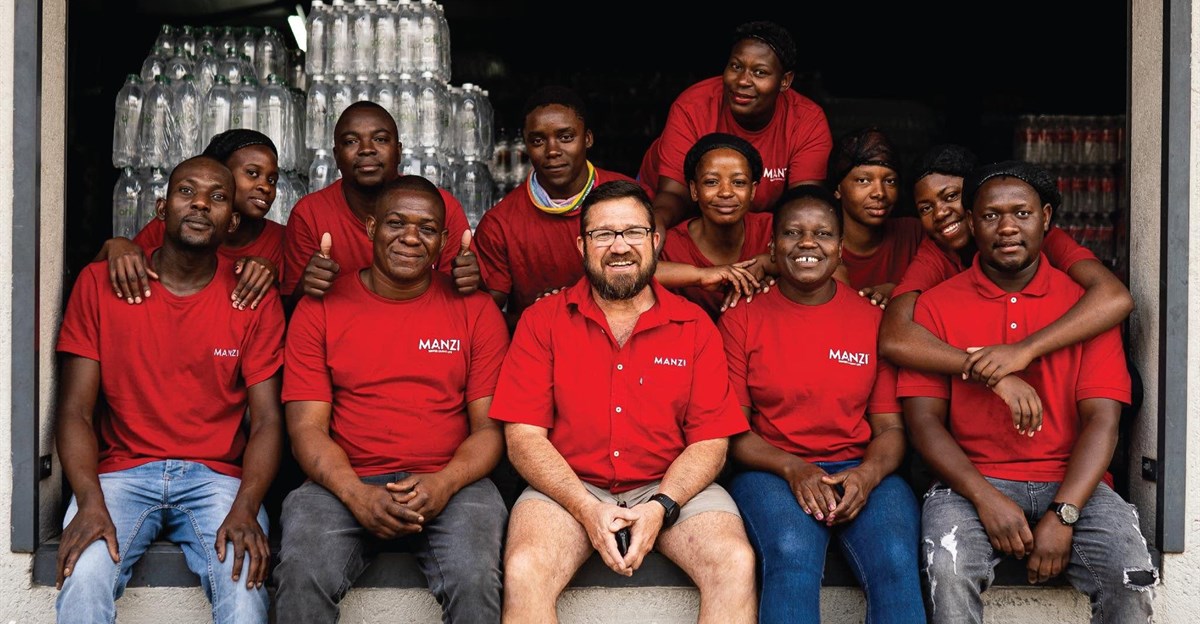
When Manzi Water was established, we made a deliberate decision not to replicate the traditional franchise model. Instead, we developed a licensed brand model because we believed there was another way to balance brand protection with entrepreneurial independence. That decision was informed by experience rather than theory and continues to shape our approach to governance, operational standards and the relationship between Manzi Water and every licensee within our network. We do not suggest that our model is perfect, nor do we claim it represents the only solution. Every business model should continue to evolve as markets, regulation and entrepreneurial expectations change.
What we do believe is that the success of a commercial network should not be measured solely by the strength of the brand at its centre. It should also be measured by the strength, resilience and independence of the entrepreneurs who choose to build that brand every day. A business model that enables entrepreneurs to grow, innovate and create lasting value strengthens both the individual business owner and the network as a whole.
The Competition Commission’s inquiry will eventually reach its conclusions, and those findings may or may not result in significant regulatory reform. Regardless of the outcome, the inquiry has already highlighted a conversation that South Africa should not ignore. As our economy continues to encourage entrepreneurship as a pathway to inclusive growth, we should be prepared to examine whether our commercial models genuinely align risk, responsibility and opportunity. That is not a challenge directed at any one business or industry body. It is a question about the kind of entrepreneurial ecosystem we want to build for the future.
Ultimately, entrepreneurship has never been defined by the logo above the door. It has always been defined by the ability of individuals to build something of lasting value through their own initiative, judgment and perseverance. If South Africa is serious about encouraging entrepreneurship, then we should be equally serious about ensuring that the people who assume the greatest risk are also given the greatest opportunity to build something they can genuinely call their own.
