
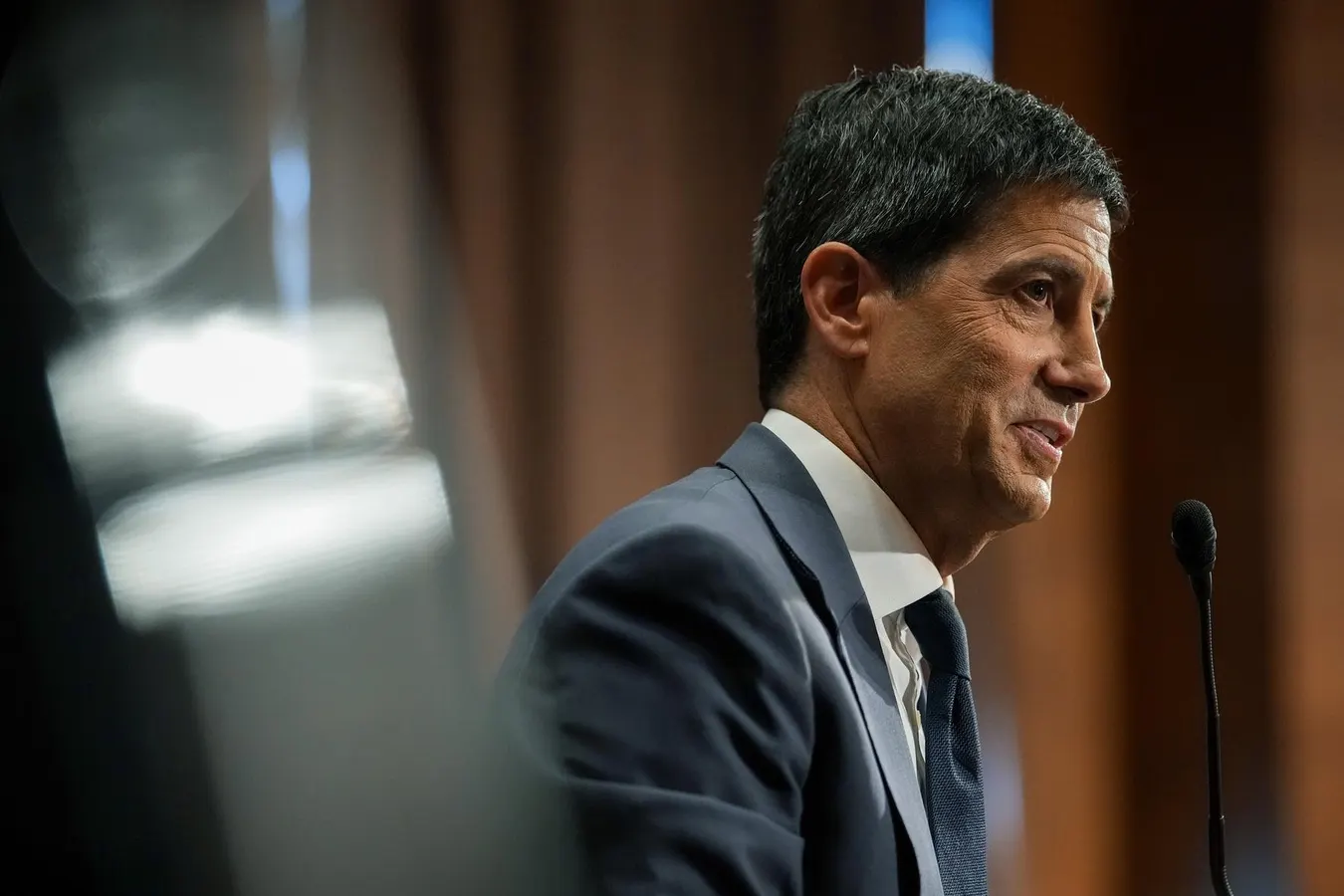
WASHINGTON, DC – APRIL 21: Kevin Warsh, U.S. President Donald Trump’s nominee for Chair of the Federal Reserve, testifies during his Senate Committee on Banking, Housing, and Urban Affairs confirmation hearing in the Dirksen Senate Office Building on April 21, 2026 in Washington, DC. President Trump nominated Warsh, a former member of the Federal Reserve Board of Governors, to replace Jerome Powell amid bipartisan concerns over the Justice Department’s criminal investigation into the central bank’s current leader. (Photo by Andrew Harnik/Getty Images)
Getty Images
Recently appointed Federal Reserve Chair Kevin Warsh is looking to move away from forward guidance. This means markets may be left guessing what the Fed will decide up until decisions on meeting days. Previously, markets typically had a general idea of what the Fed had planned at least two weeks before the meeting itself.
This meant that Fed meetings were most useful for hinting at likely rate moves a few meetings ahead. That’s because the in-meeting decision was seldom a big surprise to financial markets.
Forward Guidance To Manage Low Inflation
However, forward guidance came about largely as a tool to deal with inflation undershooting the Fed’s target. At the time the Fed was struggling with inflation that was too low. One method to combat this was for the Fed to pre-announce that rates would be held at low levels for some time. This was how forward guidance came to be.
Of course, in the past 5 years, inflation has been generally above target and forward guidance perhaps has less relevance as a policy tool. Warsh would prefer to remove it. Doing so may mean the Fed can theoretically make the best decision at each meeting, rather than dealing with the added complication of managing market expectations, too.
The Move Away From Forward Guidance
It’s unclear exactly how the move away from forward guidance will be implemented with task forces under Warsh expected to make proposals on the topic. Warsh has himself declined to provide forward-looking financial projections, though his colleagues did at the June meeting. Warsh did hold a press conference after his first meeting, though it is unclear if he will do so regularly. Policymakers still continue to give frequent speeches, at which they sometimes hint at future interest rate decisions, so it’s unclear if that will change. The first policy statement decision with Warsh as Chair was notably shorter. Overall, Warsh’s instincts seem to favor less disclosure from the Fed and less discussion of potential future policy.
What To Expect From Policy
The lack of forward guidance makes policy prediction for the remainder of 2026 more speculative. For now fixed income markets are expecting a rate increase, but it’s unclear when it might occur and whether more than one hike is possible. By December the most likely outcome is a single increase in rates, but two hikes or holding rates steady are also viewed as likely outcomes by fixed-income markets. Under previous regimes we may have got more clarity as meetings approached via hints and speeches, but now we may not learn what policymakers are thinking until the outcome of the meeting itself.
Of course, much of this depends on what inflation and employment do. For now, inflation is above target and the primary concern for most policymakers. June’s data saw some deceleration in inflation as energy prices fell, but July has seen energy costs tick up again, in a way that could drive inflation a little higher, if sustained. However, markets are likely to now have less notice on exactly what the Fed has in store.
