

- Key insight: Visa has introduced an AI-powered financial assistant targeted at bank clients.
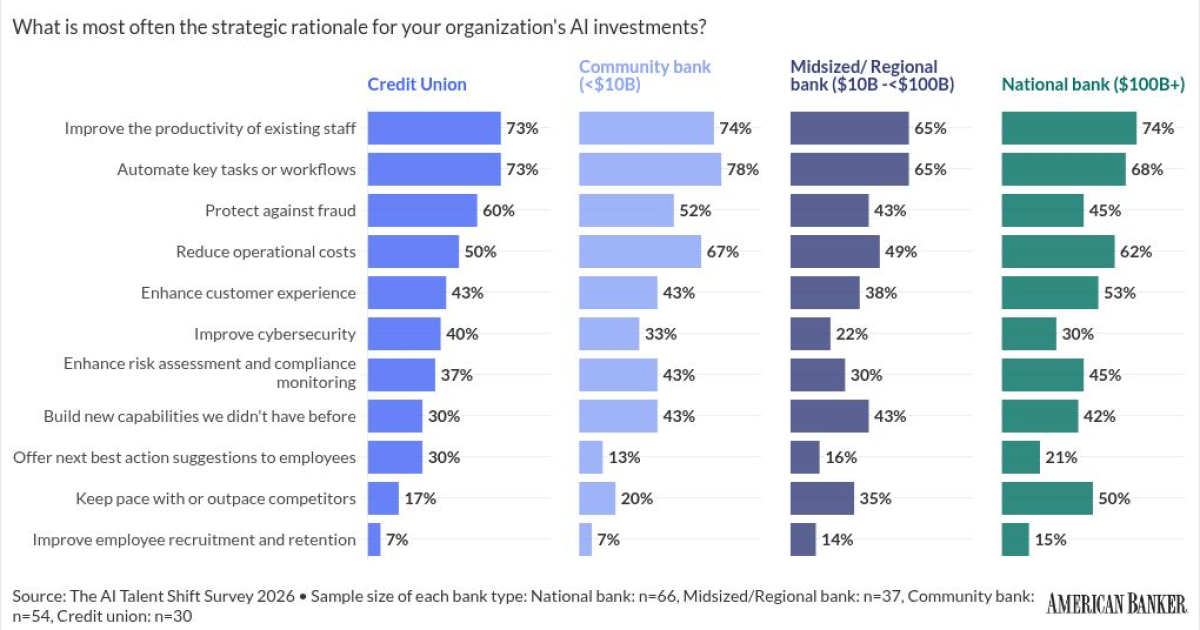
- What’s at stake: Banks are investing in AI, with customer experience being a primary strategy, and to date, Visa has not been part of this.
- Forward look: The card network will add more functions in the coming months.
With banks considering how to use
Processing Content
Visa on Tuesday launched AI Financial Assistant, which the card network says brings “conversational financial guidance” into banking apps. Visa hopes its massive payment network generates enough data to keep card issuers—and consumers—from using third-party AI programs to guide budgeting and other spending decisions.
“We have data across [
A prompt move
Visa’s financial assistant is a feature of the card network’s Digital Issuer Solutions, and includes a chatbot banks could embed in their mobile apps. Banks can connect their FAQs and documents to surface banking product information. For example, a query such as “are there any car loan benefits for existing customers?” or “do you have high-yield savings accounts to help me save for a car?” will result in recommendations based on a specific consumer’s profile, past transactions, relationships with the bank through a permisioned link between Visa and the bank, and data from similar peers. The AI model will use the consumer’s payment data—on an opt-in basis, combined with analysis of other payment data.
“If you have eight streaming services and aren’t using all of them, [the bot might generate] a recommendation to cancel,” Herron said.
While the financial assistant is focused on advice at launch, future iterations of the product will include more actionable features, such as automatically executing transactions under certain conditions, such as canceling the aforementioned streaming services.
Visa is using its own data on Visa-branded card transactions and AI platform (DAP), which provides secure access to multiple AI models, which the company evaluates to vet security, accuracy, compliance and performance.
By combining Visa’s data with existing banking apps, the card brand hopes to simplify prompting, or the complexity and number of questions that a user has to enter to produce a response from the AI program.
“That data is pivotal,” Herron said, adding the goal is to produce actionable answers in a question or two, as opposed to six or seven. “There’s a hurdle to going outside to a third party AI program.”
Visa supported its rollout by citing data from
“Consumers are already turning to AI for financial advice,” Herron said.
Urgency for AI?
Visa’s release follows other investments
Banks, the primary target market for Visa’s financial assistant, are also weighing how to responsibly
Analysts say Visa is well-positioned to compete in AI.
“Visa’s [merchant and issuer scale] in a world of more interconnected consumer commerce, AI, and money movement outweigh competitive worries,” analysts at William Blair said in a research note. “Management argued that agentic commerce will accelerate global commerce digitization, creating opportunities similar to debit, transit, and vending.”In a research note, Morgan Stanley said Visa and Mastercard can benefit from the agentic AI wave. “We also expect Mastercard and Visa to be prime beneficiaries through an expansion of value-added services as security, authentication, and fraud tooling become even more important.”
