

Artificial intelligence startups are facing two massive headaches: There’s too much AI-generated code to deal with, and not nearly enough computing power to run it all on. Modal Labs Inc., which has just raised $355 million in a new funding round, believes it can kill both birds with one stone.
The New York City-based startup says today’s round was led by Redpoint Ventures and General Catalyst, and saw participation from Accel and Menlo Ventures. It brings the company’s valuation to $4.65 billion, up from just $1.1 billion when it last secured funding in September.
The big jump in Modal’s valuation mirrors the lightning-fast rate of AI adoption among enterprises and software companies. Developers are leaning on AI coding tools more than ever in order to increase the speed at which they can update and create new applications, and the resulting velocity has led to a sharp increase in demand for the infrastructure those new apps need to run.
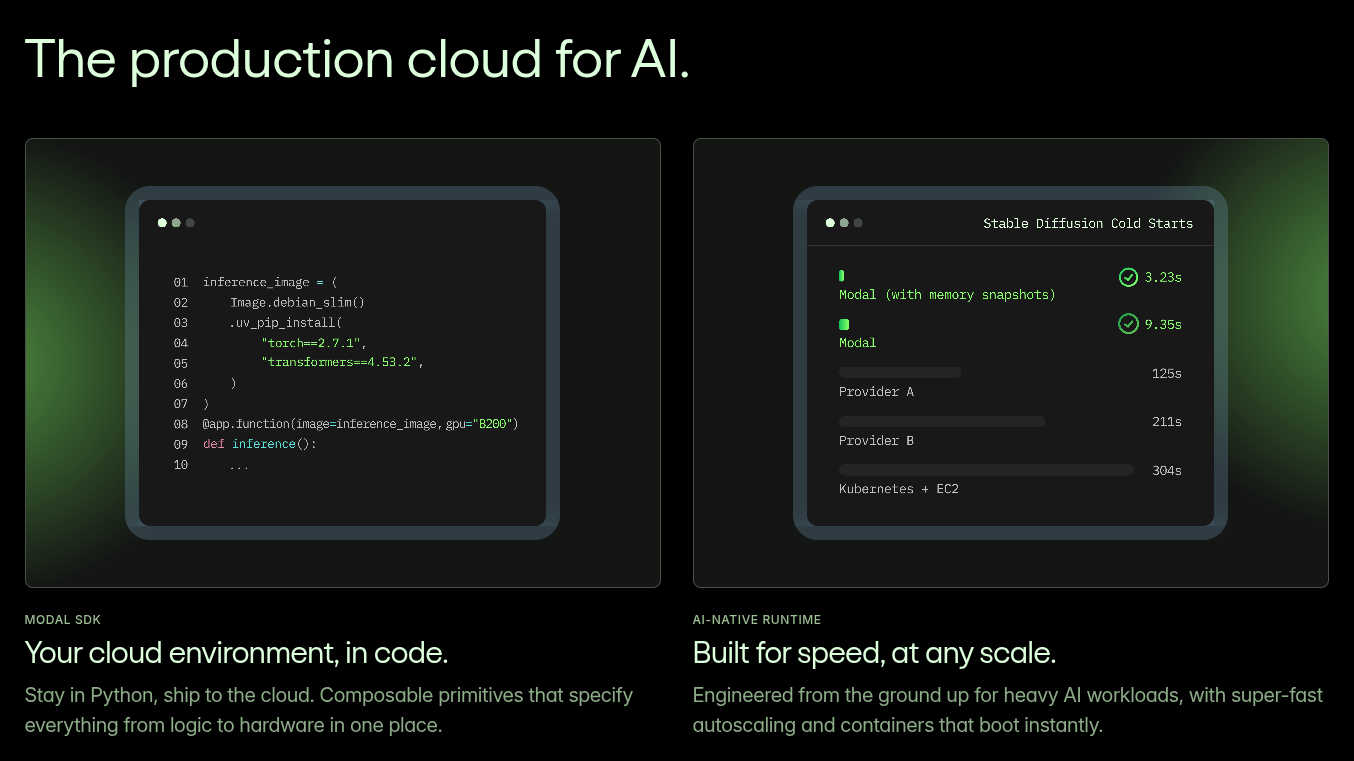
Modal’s platform makes it simple for companies to rent access to the graphics processing units needed for running AI inference workloads, or the process of executing trained AI models. Its serverless infrastructure platform enables developers to deploy AI applications without having to worry about how to manage the underlying cloud servers. All of the management is handled by Modal itself, so developers only have to focus on their app’s performance. The company also offers sandbox environments for developers to test newly generated AI code before running it in production.
Modal is led by co-founders Erik Bernhardsson and Akshat Bubna, who serve as chief executive and chief technology officer, respectively. They say that the company’s revenue has grown tremendously in the time that has passed since it last secured funding.
“The last six months have been driving everything,” Bernhardsson told Reuters, citing the rapid enterprise adoption of AI coding tools like Anthropic PBC’s Claude Code. He said the company’s client base is extensive, and includes everything from biotechnology firms to hedge funds and even weather forecasting startups.
Modal doesn’t own the underlying servers it rents out to clients, but instead makes use of third-party providers, renting capacity in bulk. Bernhardsson said the demand for compute capacity has made it difficult to secure enough infrastructure to meet his customer’s needs, and also resulted in a spike in infrastructure costs.
However, the company has cast a wide net for compute partners, and now works with 13 infrastructure firms, up from just five before. He said the company now relies on compute from a number of infrastructure providers that he’d never even heard of until a few months earlier.
Bernhardsson’s efforts have paid off, though, for Modal has some serious momentum behind it. It’s now generating about $300 million in annual revenue, up from just $60 million in September, he said.
The latest funding round came via two separate tranches. The first group of investors backed the company at a valuation of $2.5 billion, only for a second tranche of investors to emerge that pushed its value up even further.
Image: Modal Labs
Support our mission to keep content open and free by engaging with theCUBE community. Join theCUBE’s Alumni Trust Network, where technology leaders connect, share intelligence and create opportunities.
- 15M+ viewers of theCUBE videos, powering conversations across AI, cloud, cybersecurity and more
- 11.4k+ theCUBE alumni — Connect with more than 11,400 tech and business leaders shaping the future through a unique trusted-based network.
About SiliconANGLE Media
Founded by tech visionaries John Furrier and Dave Vellante, SiliconANGLE Media has built a dynamic ecosystem of industry-leading digital media brands that reach 15+ million elite tech professionals. Our new proprietary theCUBE AI Video Cloud is breaking ground in audience interaction, leveraging theCUBEai.com neural network to help technology companies make data-driven decisions and stay at the forefront of industry conversations.
