
President Donald Trump visited New York Friday afternoon to promote his economic agenda, emphasizing tax cuts, regulation cuts, and spending cuts during his first year in office. “My first year, we passed the largest tax cuts in American history, the largest regulation cuts in American history, and the largest spending cuts in American history, all things that are so important to greatness,” Trump said. The president also pointed to the stock market’s performance, saying, “Stock market’s up 600 points.” Trump used the swearing-in ceremony of the new Federal Reserve chairman to highlight his economic record, but his message comes at a complicated time. Americans traveling this Memorial Day weekend will face some of the highest gas prices on record, according to data. Surveys show growing dissatisfaction with the economy. An AP-NORC poll found that only about one-third of U.S. adults approve of Trump’s handling of the economy. Additionally, the University of Michigan reported that consumer sentiment fell in May to its lowest point on record, with declines across all political affiliations. “Coming into this month, Democrats were already somewhat downbeat about their view of the economy, but what is deteriorating now is the view of the economy on the part of independents and Republicans,” said Mark Hamrick of Bankrate.com. The question heading into the midterms is whether Trump can convince voters that his economic agenda is working for them. While he is promoting growth and tax cuts, many Americans are measuring the economy by prices, gas costs, and what their paychecks can cover. Kevin Warsh, the newly sworn-in Federal Reserve chairman, is a 56-year-old former governor of the Federal Reserve and is familiar with the institution. Warsh has expressed interest in reforms at the central bank and vowed to remain independent despite Trump’s push for lower interest rates. Experts suggest the Federal Reserve may need to raise rates soon due to high inflation. Even if Warsh supports cutting rates, he is only one of seven votes on the Federal Reserve Board.
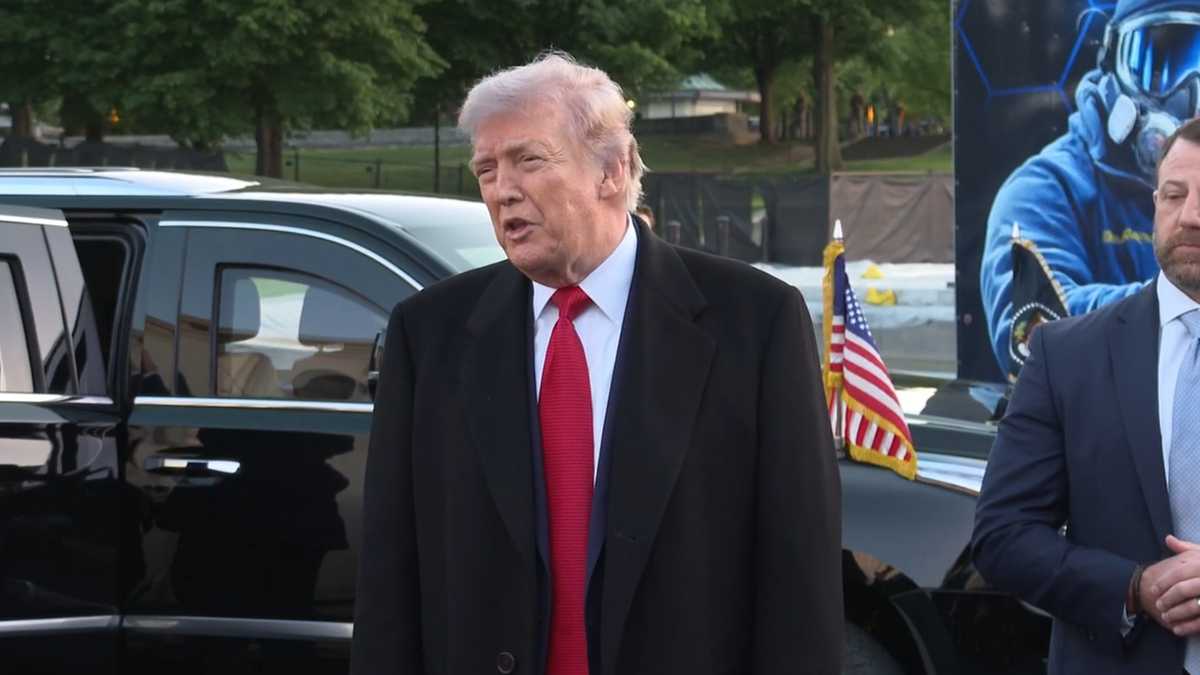
President Donald Trump visited New York Friday afternoon to promote his economic agenda, emphasizing tax cuts, regulation cuts, and spending cuts during his first year in office.
“My first year, we passed the largest tax cuts in American history, the largest regulation cuts in American history, and the largest spending cuts in American history, all things that are so important to greatness,” Trump said.
The president also pointed to the stock market’s performance, saying, “Stock market’s up 600 points.”
Trump used the swearing-in ceremony of the new Federal Reserve chairman to highlight his economic record, but his message comes at a complicated time. Americans traveling this Memorial Day weekend will face some of the highest gas prices on record, according to data.
Surveys show growing dissatisfaction with the economy. An AP-NORC poll found that only about one-third of U.S. adults approve of Trump’s handling of the economy. Additionally, the University of Michigan reported that consumer sentiment fell in May to its lowest point on record, with declines across all political affiliations.
“Coming into this month, Democrats were already somewhat downbeat about their view of the economy, but what is deteriorating now is the view of the economy on the part of independents and Republicans,” said Mark Hamrick of Bankrate.com.
The question heading into the midterms is whether Trump can convince voters that his economic agenda is working for them. While he is promoting growth and tax cuts, many Americans are measuring the economy by prices, gas costs, and what their paychecks can cover.
Kevin Warsh, the newly sworn-in Federal Reserve chairman, is a 56-year-old former governor of the Federal Reserve and is familiar with the institution. Warsh has expressed interest in reforms at the central bank and vowed to remain independent despite Trump’s push for lower interest rates.
Experts suggest the Federal Reserve may need to raise rates soon due to high inflation. Even if Warsh supports cutting rates, he is only one of seven votes on the Federal Reserve Board.
