

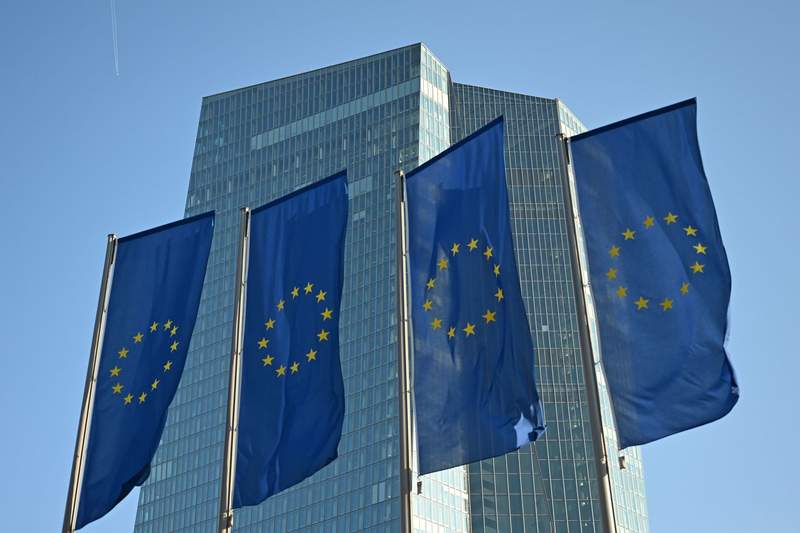
The Iran war continues to test the resilience of EU banks and businesses, with rising energy prices driving up inflation and disrupting economic growth, the European Central Bank (ECB) warned on Wednesday.
“The current energy supply shock poses upside risks to inflation and downside risks to economic growth,” ECB Vice President Luis de Guindos was quoted as saying in a press release on the bank’s financial stability review.
“It could also increase market volatility and challenge debt servicing capacities as financing costs rise in an environment of weaker economic growth.”
The central bank noted that, despite a series of shocks, the global financial system and the real economy have proven remarkably resilient through 2026.
However, the war in the Middle East is testing this resilience, it said.
“Acute geoeconomic stress is being amplified by lingering uncertainty about global trade and international cooperation. Also, cybersecurity risks and hybrid threats to critical infrastructure are rising in this complex geopolitical environment.”
The ECB is also closely monitoring lending practices of non-bank lenders, which are often “opaque,” it said.
“While not a systemic concern per se in the euro area, opaque and interconnected private markets warrant close monitoring owing to spillover risks, especially from the United States.
“In particular, the combination of low liquidity buffers, high portfolio valuations and concentrated exposures on their balance sheets raises the risk of forced asset sales that could amplify market stress.”
