
Global financial markets have rebounded from the disruptions caused by the war in Iran and a leading mutual fund manager is reporting that this has been positively reflected in its investment portfolio.
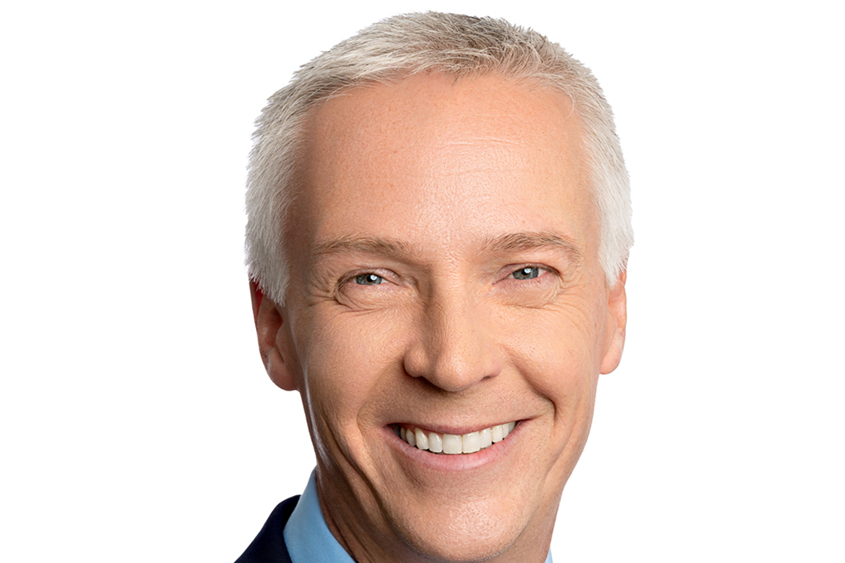
Fortress Fund Managers chief executive officer and chief investment officer Peter Arender recently updated investors on the second quarter performance of the company’s Barbados dollar and United States (US) currency funds, highlighting improved returns across the board.
Arender reflected on what he called “quite a positive quarter for investments in financial markets, including the Fortress funds”.
“For the quarter, the Caribbean Growth Fund was up 5.8 per cent, that puts its one year return at 9.3 per cent. The Caribbean High Interest Fund for the second quarter gained 1.3 per cent and that puts its one year number at 3.1 per cent,” he reported.
“On our US dollar fund side, second quarter, the World Growth Fund gained 6.7 per cent, that puts its one year return at 11 per cent even and on the US dollar fixed income side, the World Fixed Income Fund gained 1.8 per cent in the second quarter and is up 3.1 per cent for the full year.”
Arender said this performance and the overall market rebound “actually goes to show some of the power of having low expectations”.
“Because you can remember back at the end of March, the war in Iran had just started. We had the oil shock, worries about other disruptions to the global economy, not to mention the tragic human things going on, and financial markets that were at a low point at the end of March – so, the end of the first quarter,” he recalled
“Now since then we’ve had a gradual sort of normalisation of things, I guess the worst of the impact of the higher oil prices wasn’t really felt.
“Some of the largest fears didn’t come to pass. And as we sit here now in early July, it seems that things are significantly improved on that front, and oil prices are back down to where they were before the conflict started.”
While calling the Fortress Returns some nice ones, the investment expert, pointed out that the gains “were a little bit behind where some parts of the US market and certainly some parts of the emerging markets gained, especially Korea, this quarter, as in addition to the situation normalising a little bit in the Middle East, we also had investor excitement over the artificial intelligence (AI) build out centred in this particular case on memory chip makers”.
“And so that’s led to a whole bunch of gains in the last quarter, and even over the last several months in some of those areas,” he said.
“We own and have some exposure to some of these stocks, we’ve been surprised by how much they’ve moved and I think some of the adjustments we’re making at the margin in our portfolios over the last little while has been something we’ve called de-frothing.
“Where things have gotten a little frothy, we’ve been taking a little bit off the table, and even though the underlying fundamentals still look positive, the advances in prices have been quite abnormally large.”
Arender also said that Fortress still saw “great value in some of the areas of the stock market that have been beaten down and left behind, areas like software and consumer stocks, where sentiment has certainly not been as positive as it has been in the AI space”.
“So here we sit wondering about the future now. I think that for the rest of the year the markets certainly have shown us how they can work through some noise over the last few months,” he stated.
“Coming up, we’ve got the US midterm elections, inflation will still be a question as oil prices have declined, and we’ll have to see where things settle on how much price advance on the AI stuff was actually justified.
“So from our perspective, steady as she goes, we still own good companies at good prices, and we expect to continue posting positive numbers for the foreseeable future,” Arender said.
The testing first quarter for mutual fund companies in Barbados was reflected in the first quarter outcomes for Fortress funds. At the end of March, the Caribbean Growth Fund declined by 1.7 per cent, the Caribbean High Interest Fund was down 0.3 per cent, and the Caribbean Pension Fund declined between 0.4 per cent and 1.3 per cent.
Other mutual fund companies also reported a difficult first quarter.
For example, the Sagicor (Equity) Fund’s report for the quarter ended March 31 noted that the fund fell by 2.3 per cent and its net asset value decreased to $82.62 as at March 31, 2026, from $84.57 at the end of 2025. Total net assets were reported at $670.6 million at the end of March, compared to $686.7 million as at December 31, 2025.
There was better news for the Sagicor (Bonds) Fund.
The first quarter report for this fund stated: “Sagicor (Bonds) Fund’s net asset value increased to $34.12 as at March 31, 2026, compared to $33.79 as at December 31, 2025. As at March 31, the fund grew by one per cent.
Total net assets were reported at $469.7 million at March 31, compared to $465.2 million at the end of December 2025.
The Sagicor report said that “geopolitical tensions which escalated in the Middle East drove a sell-off¬ in stocks and bonds globally”.
“Commodities were one of the main bright spots during the quarter with the Bloomberg Commodity Index up 24.4 per cent. This uptick was driven by a sharp rise in oil prices following the damage to key energy infrastructure in the Middle East and the de facto closure of the Strait of Hormuz,” it noted.
Closer to home, the report shared that “the first three months of the year proved to be an exceptional quarter for Jamaican equities with the Jamaica Stock Exchange Index up 8.8 per cent”, while the Eastern Caribbean Stock Exchange Index positively returned 1.4 per cent.
“In contrast, the Barbados Stock Exchange Index fell by 0.6 per cent, and the Trinidad and Tobago Stock Exchange All Composite Index fell by 1.4 per cent respectively,” the report added.
At RF Bank & Trust Barbados in the first quarter, the Premium Income Fund returned 0.3 per cent, while the Strategic Growth Fund was up 0.2 per cent and the Select Balance Fund was up 0.1 per cent.
“Global equity markets had a difficult first quarter of 2026. US equities fell 4.3 per cent, the weakest quarter for large caps since 2022,” RF said.
“Markets started the year positively, supported by solid economic fundamentals, but US and Israeli strikes on Iran in late February disrupted oil supply through the Strait of Hormuz, triggering an energy price surge and broad risk-off sentiment that dominated markets through March”.
It added that Global government bond markets “faced a turbulent quarter, with yields rising broadly as the Middle East conflict stoked inflation fears and prompted a significant repricing of interest rate expectations”.
