

Federal agents traced the Bitcoin to Myanmar and froze a fraction of the stolen funds
MACON, Ga. — A Dooly County man lost more than $164,000 after scammers convinced him to invest his savings in cryptocurrency through a fake trading platform — and federal investigators say it started with a simple Facebook message.
The FBI filed a civil forfeiture complaint March 24 in U.S. District Court in Macon, laying out how the victim, identified only as J.M., fell prey to a scheme known as “pig butchering” — a type of romance scam in which fraudsters build trust with victims over weeks or months before coercing them into sending money to fraudulent crypto investment platforms.
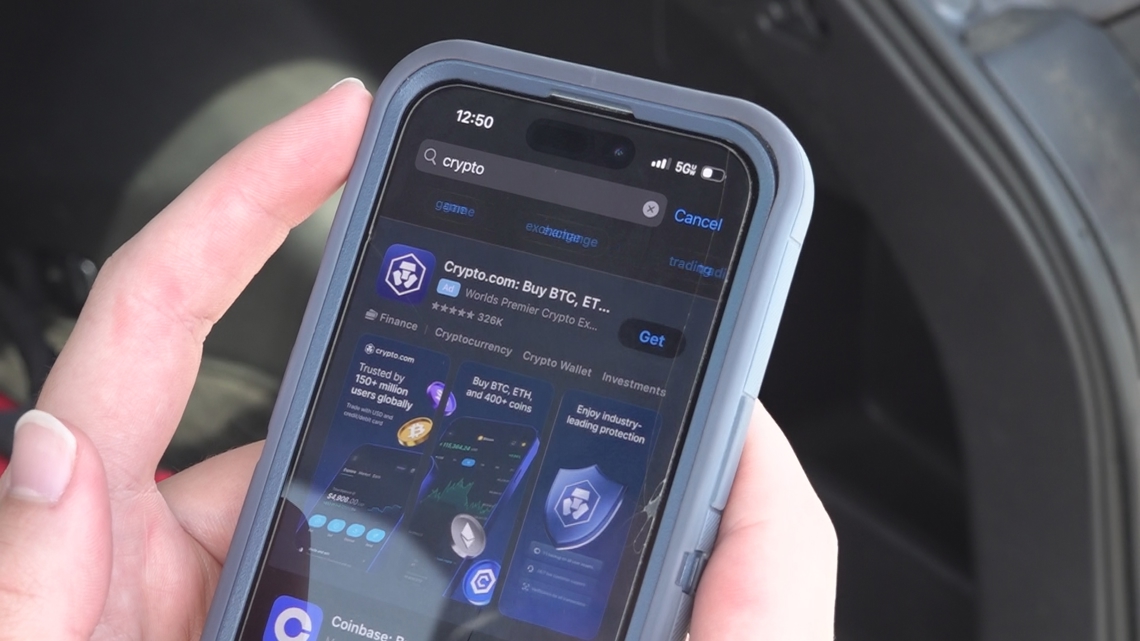
According to the complaint, J.M. met a woman calling herself “Hnin Phyu” on Facebook in June 2025. She quickly moved their conversation to Telegram and introduced him to cryptocurrency investing. He trusted her and followed her instructions to set up accounts on Crypto.com and a digital wallet service before transferring his money to a fake trading website that displayed fabricated profits.
“Their job is to find commonalities, find common interests, and just make you think that you now have a new friend,” said Aaron Seres, a supervisory special agent with FBI Atlanta’s Financial Crimes Squad. “Sometimes that’s a relationship that is romantic. Sometimes it’s just a friend.”
When J.M. tried to withdraw his money, scammers told him he owed an additional $50,000 in taxes and fees to release his funds. Court documents show he made multiple Bitcoin transfers in November 2025 totaling more than $32,000 from his Crypto.com account alone, on top of earlier losses.
The FBI traced the funds to two Binance wallets registered to individuals in Myanmar. Agents froze roughly $24,000 before it could be moved and seized approximately 0.28 Bitcoin — valued at around $18,200 — which is now in the custody of the U.S. Marshals Service.
Johnathan Yerby, director of Mercer University’s Center for Cyber Outreach Research and Education, said scammers deliberately use legitimate platforms early in the scheme to lower victims’ guard.
“Intermittent pieces are completely legitimate, like setting up a Crypto.com account,” Yerby said. “And so it lulls them into a sense of security — a sense of like, OK, this is normal.”
Yerby added that the people running these scams are often victims themselves — trafficked workers forced to defraud others under threat of violence in compounds primarily located in Southeast Asia.
The scheme is part of a broader crisis. Georgia residents reported more than $152 million in investment fraud losses in 2024, with cryptocurrency accounting for $132 million of that total, according to FBI data. Nationally, crypto investment fraud losses grew from under $50 million in 2019 to roughly $6.6 billion last year.
Seres said the FBI’s Operation Silent Freeze, launched in October 2025, is specifically targeting cryptocurrency fraud schemes impacting Georgia victims.
“Cryptocurrency moves with the speed of light — it’s across the globe in half a second sometimes,” Seres said. “The faster you provide that information, the better chance we have.”
Investigators are urging anyone who suspects they are a victim to contact their bank immediately and file a complaint at IC3.gov, the FBI’s Internet Crime Complaint Center. The agency says providing specific crypto wallet addresses used in transactions is critical to any recovery effort.
The FBI also recommends verifying any investment advisor or broker through FINRA’s BrokerCheck tool at finra.org before sending money.
