

Updated May 20, 2026, 4:12 p.m. ET
Six million foreclosures and 10% unemployment. Stocks down 50%, major banks in collapse, and a frozen lending landscape.
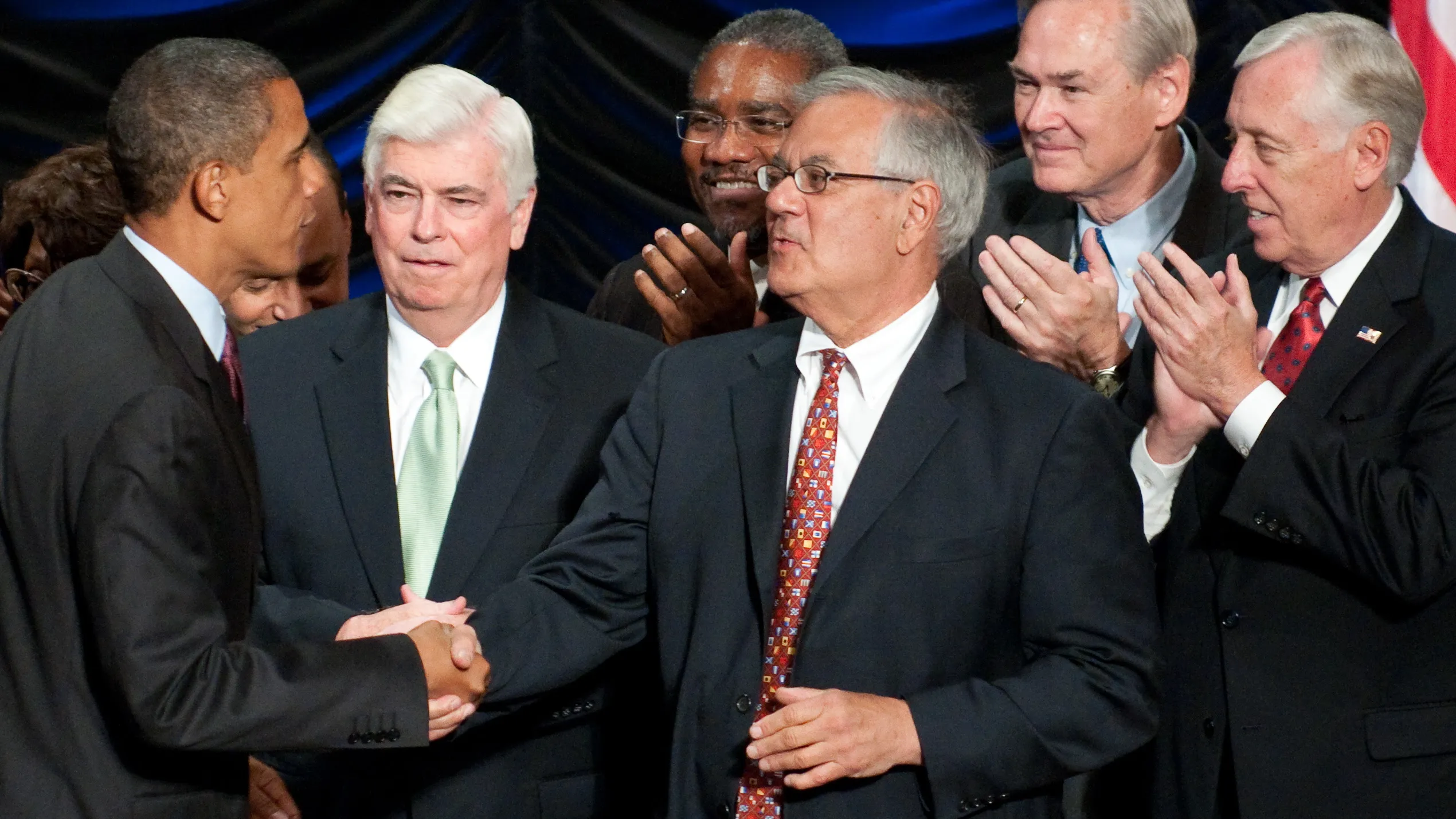
The 2008 financial crisis was brutal and, most observers believe, largely preventable. In its wake, Congress set out to make sure nothing of its scale would ever happen again. Barney Frank, the former Massachusetts representative who died May 19, was one of the key leaders of those efforts.
The Dodd–Frank Wall Street Reform and Consumer Protection Act, later referred to simply as “Dodd-Frank,” took over a year to write and was finally signed into law in July 2010. It aimed to make banks stronger so they wouldn’t need to turn to the government for bailouts, and to protect consumers of financial products and services. To a lesser extent, the law also established some guardrails around financial markets to protect investors.
What did Dodd-Frank do for consumers?
“What the leadup to the passage of Dodd-Frank showed, which was manifested in the crash of 2008, was that there was an ability for people to be taken advantage of in the realm of financial services and products,” said Pamela Foohey, a professor at the University of Georgia School of Law specializing in bankruptcy and consumer finance.
The primary way Dodd-Frank addressed that was by creating the Consumer Financial Protection Bureau, which tried to fill a gap in the regulatory landscape.
“Several federal agencies had what I would call light regulatory power over things that had the ability to have big impact on people’s lives, but not one place that was designed to think about the financial products that people used on a daily basis and how those financial services providers might not have the consumers’ best interest in mind,” Foohey told USA TODAY.
The CFPB was designed to facilitate interaction between consumers and financial services providers, not to act as a disciplinarian, Foohey believes. One of the most notable ways it does that is through its complaints portal, which allows consumers to lodge complaints that the bureau forwards to the subject for response.
As an example, the CFPB reports that in 2025, it “received more than 6.6 million complaints and sent more than 5.9 million to companies for review and response. Of those complaints sent to companies, the Bureau sent 97% to a company in a day or less. Companies, in turn, provided a timely response to more than 99% of complaints sent to them for review and response.”
Foohey considers the CFPB a success, even though it’s had to fight to remain open ever since it began, most notably under the current Trump administration, which has largely gutted its staff and restricted its activities.
The bureau “made significant inroads and steps forward in terms of identifying practices that had been overlooked in consumer lending that did not help people succeed,” Foohey said. Those practices included predatory mortgage lending, junk fees, confusing jargon on financial product descriptions, payday loans, and much more.
However, the CFPB has been disliked by businesses, financial institutions, and many Republican politicians.
Trump told reporters in February 2025 that his administration is “trying to get rid of waste, fraud and abuse,” and he wanted to dismantle the agency. The American Bankers Association also previously told USA TODAY it was grateful for “efforts by Trump administration regulators, including the CFPB, to correct some of the overreach from the prior administration.”
What did Dodd-Frank do about banks?
Dodd-Frank also tried to tackle the issues that brought some of the world’s biggest banks to their knees as the financial markets buckled. One of its primary mechanisms was requiring them to hold more capital, a step Dennis Kelleher, the co-founder and CEO of watchdog group Better Markets, calls critical.
“Capital at banks serves the same function as a down payment on a house,” Kelleher told USA TODAY. “When a bank loses money, they’re supposed to have enough capital to absorb their own losses, not fail. That’s what happened in 2008 and that’s why they were bailed out. But a bailout is really nothing more than taxpayers giving banks capital after they’ve crashed.”
Dodd-Frank has been less successful in this regard: Three mid-sized banks collapsed in 2023. Kelleher says that’s because of one of the law’s big failings: It left 400 rules to various regulators to write and implement.
“When it didn’t defeat Dodd-Frank in Congress, the financial industry moved its army of lawyers and lobbyists into the regulatory arena to try and defeat what they didn’t defeat in the legislative arena,” he said.
What’s left behind is a much weaker law, which faces even more erosion as the Trump administration takes more steps to weaken regulations. The Securities and Exchange Commission, for example, has taken a light touch with cryptocurrency firms, and recently moved to allow publicly-traded companies to report earnings twice a year rather than four.
“The markets are being massively deregulated,” Kelleher said. “They have shut down enforcement, and therefore the financial predators can provide investors with less information and rip them off more often.”
Foohey thinks a lot of the rollbacks are self-defeating. “The point of Dodd-Frank, which I don’t want to get lost, was to help the economy and the people in it, which would make more money for anyone.”
