

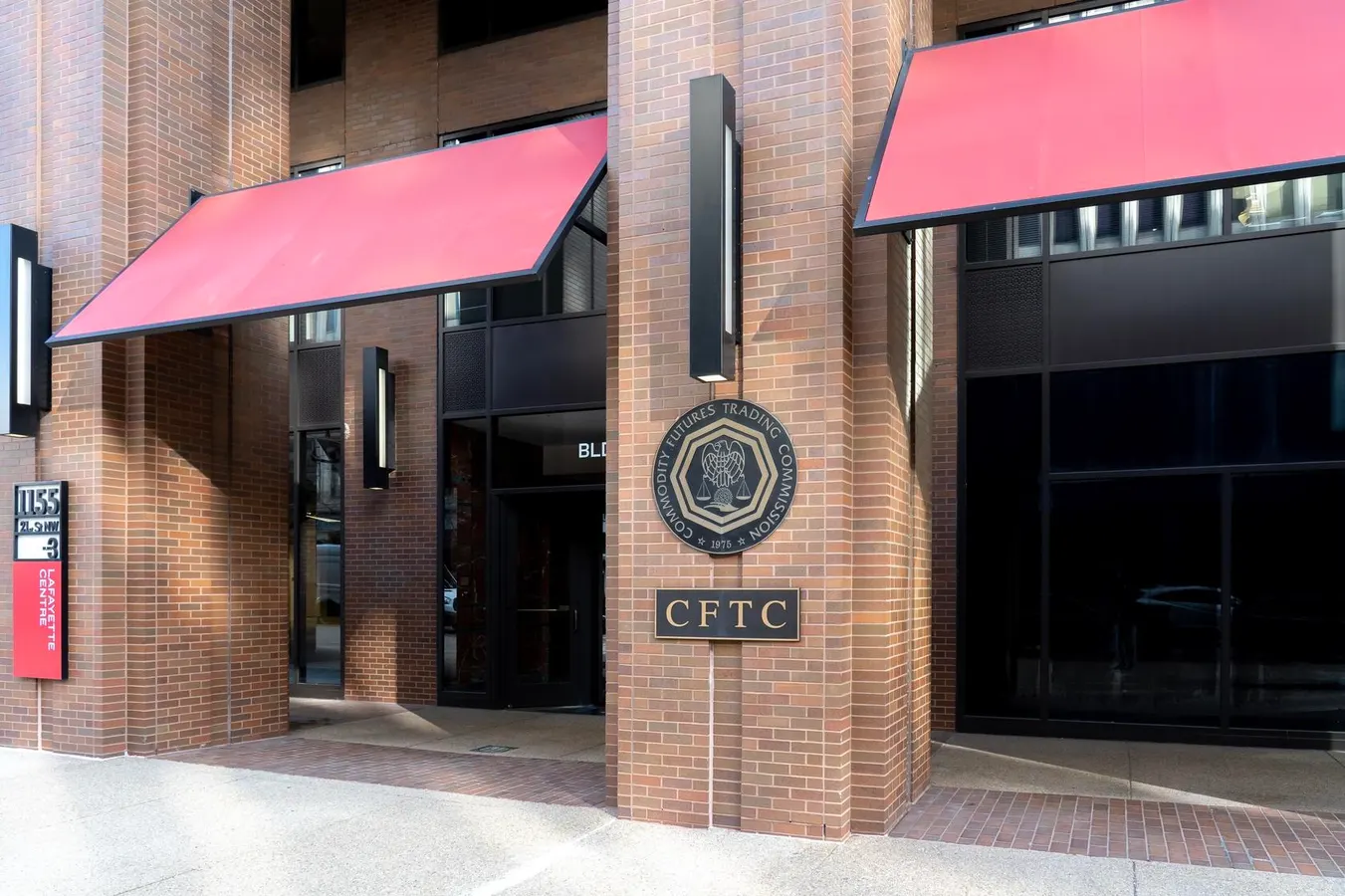
Exterior view of the U.S. Commodity Futures Trading Commission (CFTC) headquarters in Washington, D.C., as lawmakers advance the CLARITY Act expanding CFTC oversight of cryptocurrency markets amid ongoing staffing reductions and regulatory restructuring.
getty
The Commodity Futures Trading Commission has 556 full-time employees. The Securities and Exchange Commission has more than 4,000. The CLARITY Act, which the Senate Banking Committee marked up this week, would put the smaller agency in charge of regulating U.S. crypto spot markets, a sector that processed $18.6 trillion in global volume last year and is on pace to grow in 2026.
The political fight over CLARITY is well-trodden territory. SEC versus CFTC. Banks versus exchanges. States versus the federal government. The implementation fight will be smaller and stranger. It will turn on whether the CFTC can write the rules, staff the supervision teams, and process the registration applications in the window the bill provides.
The 21% staff cut
CFTC full-time equivalent staff dropped from 708 at the end of fiscal 2024 to 556 at the end of fiscal 2025, a 21% reduction in one year, according to the agency’s own inspector general. Congress appropriated $365 million for fiscal 2026. The SEC, by comparison, runs on roughly $2.1 billion. CLARITY hands the smaller agency a workload several former CFTC officials compare to Dodd-Frank.
Title IV of the House version of the bill builds a federal registration regime for digital commodity exchanges, brokers, dealers, and qualified custodians. The CFTC writes the listing standards, capital requirements, customer asset segregation rules, custody framework, conflict-of-interest provisions, and chief compliance officer obligations. It runs the certification process for new tokens. It supervises a registered futures association. Section 112 requires the CFTC and SEC to promulgate all rules within 360 days of enactment. Section 414 makes the Title IV registration regime effective in 270 days.
For perspective, the CFTC’s own Crypto Sprint, a narrower initiative covering technical amendments around tokenized collateral and reporting, is targeted to finish in August 2026. That is the agency’s existing pace under existing authority. Add CLARITY on top, and the timelines start to look fictional.
Permanent rules on temporary funding
Liz Davis, a former CFTC enforcement lawyer now at Davis Wright Tremaine, compared the workload to Dodd-Frank rulemaking. Dodd-Frank took the CFTC roughly five years to implement, with peak staffing above 700. Rob Schwartz, a former CFTC general counsel now at Morgan Lewis, called the agency “broadly understaffed.“Neither characterization comes from a crypto critic. Both are from people who built the agency’s modern regulatory architecture.
Congress is aware of the gap. The Senate Agriculture Committee’s version of the bill authorizes an additional $150 million for the CFTC and allows the agency to collect annual and volume-based fees from the new digital commodity registrants. Section 410 of the House bill provides similar fee authority and grants expedited hiring authority. The mechanism is creative. The design has a structural problem. Both authorities sunset after four fiscal years. The agency is being asked to build a permanent regulatory regime on temporary funding.
That trap is familiar. Without dedicated resources, the SEC leaned on enforcement actions to make crypto policy over the past decade. CLARITY was supposed to end that pattern. If the CFTC arrives at year five without permanent appropriations, the agency will face the same incentive structure: less rulemaking, more enforcement. The industry will get exactly the regulatory environment CLARITY was sold to prevent.
One commissioner, an expanding mandate
Scale compounds the budget problem. Crypto-native exchanges, traditional broker-dealers seeking dual registration, asset managers building tokenization platforms, custodians, and futures commission merchants all queue up for the same CFTC application reviews. The agency that ran fiscal 2025 with 556 staff is the agency that is supposed to clear that queue.
CFTC Chairman Michael Selig, confirmed in December 2025, inherited a remit that has grown faster than the agency. Beyond CLARITY, the CFTC is asserting jurisdiction over prediction markets, running a joint Project Crypto initiative with the SEC, building rules for perpetual futures, and drafting DeFi guidance. Each mandate competes for the same pool of attorneys and economists. During his confirmation hearing, Selig declined to commit to a specific funding figure, saying he would assess the agency’s needs first.
Commissioner vacancies compound the staffing problem. The CFTC is statutorily a five-member body. With the departure of former Acting Chairman Caroline Pham, Selig may be the agency’s sole confirmed commissioner, concentrating rulemaking authority in a single seat. That accelerates output. It also weakens the legitimacy of the rules in the eyes of Democrats, industry, and any future court reviewing them.
Plan for ambiguity
The practical question for the industry is not whether CLARITY passes. The Senate Banking markup gives the bill reasonable odds of moving through this Congress. The question is what the U.S. regulatory regime looks like in the gap between law and rulebook. Title IV’s registration regime is supposed to be effective 270 days after enactment. If the CFTC cannot finalize rulebooks, hire examiners, build supervision teams, and stand up a digital asset custody framework in that window, the industry operates under provisional status under Section 106. Provisional regimes are temporary by design. They tend to last.
For builders, the planning implication is straightforward. CLARITY’s deadlines should be read as outer bounds, not effective dates. Capital requirements, custody arrangements, and product design choices that depend on final rules will not have final rules at the 270-day mark. They will likely not have them at the 360-day mark either. The firms that win this window are the ones that engineer for ambiguity: flexibility on counterparty registration status, conservative legal positions on staking and dual-registered ATSs, and real engagement with CFTC staff during rulemaking rather than just public comment.
CLARITY is the right policy. It draws lines that should have been drawn five years ago. The implementation problem is that Congress is asking for a Dodd-Frank-scale rulemaking with Dodd-Frank-era funding levels, on temporary fee authority, at an agency that has lost more than a fifth of its staff in the last fiscal year. The legal certainty CLARITY promises will arrive. It will just take longer than the bill text is willing to admit.
