

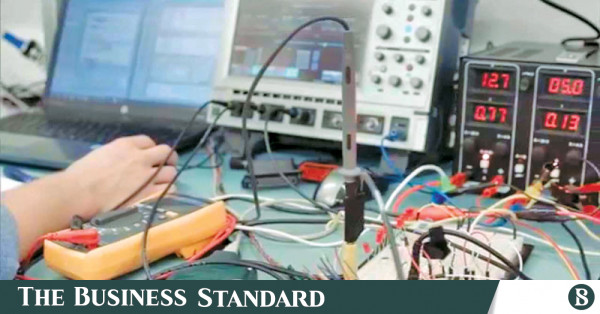
A major gap has emerged between outdated technologies used in Bangladesh’s technical and diploma education system and the modern requirements of industries, leaving many diploma and vocational graduates struggling in the job market.
As a result, many students are being forced to undergo additional training for three to six months even after completing their formal education.
The concerns were raised by students, employers and experts at the day-long “Technical Career Fair 2026” held yesterday (19 May) at the Krishibid Institution Bangladesh (KIB) auditorium in Farmgate, Dhaka. The issues emerged from conversations with around 30 job seekers and representatives from 10 recruiting companies.
Students said many of the machines used in technical institutes are based on outdated technology, while industries are now operating modern systems such as CNC (Computer Numerical Control) machines and other advanced equipment.
Siam Sikdar, a mechanical engineering student at Chattogram Polytechnic Institute, said many of the machines used for practical training at his institute were 30 to 40 years old.
“In many cases, we receive manual hands-on training, but when we enter industries, we see operations being run with CNC machines,” he said.
MD Waliullah Haque, a diploma student in electrical engineering at Dhaka Polytechnic Institute, said outdated training equipment limits students’ opportunities to gain practical experience.
“That’s why I came to the fair looking for additional training and hands-on learning opportunities that could help me in future jobs,” he said.
Employers also acknowledged the skills gap, saying many newly recruited workers require additional training after joining.
Mahin Mahamud, senior executive (HRBP, Admin and Compliance) at AkijBashir Group, said the company’s factories located in Mymensingh, Habiganj and Manikganj require engineers, electricians and mechanical workers for manufacturing tiles, tableware and sanitary products.
“Even candidates from reputed institutions often lack practical knowledge and industry-based experience,” he said. “As a result, we have to retrain many of them after recruitment.”
He added that candidates with trade courses, internships and hands-on experience adapt more quickly to workplace demands.
Experts at the fair’s opening session said the country’s education system remains poorly aligned with industry needs, creating a situation where large numbers of young people are entering the labour market while companies still struggle to find skilled workers.
Executive Director of UCEP Bangladesh Dr Abdul Karim said that in developed countries, the ratio between general and technical education is roughly 20:80, whereas Bangladesh has the reverse situation, with around 80% of students enrolled in general education and only 20% in technical education.
“To remain competitive after LDC graduation, Bangladesh must prioritise skills-based education,” he said.
Speaking to TBS, Dr Abdul Karim said technical training institutions need to design courses based on industry demand analyses and strengthen collaboration between academia and industry. He also stressed the need for greater government financial and technological support for training institutions.
Meanwhile, Fahim Mashroor, founder and CEO of Bdjobs, said around 7 lakh students graduate each year in Bangladesh, while 21 to 22 lakh new entrants join the labour market annually.
He noted that manufacturing and agriculture remain the country’s largest employment sectors, where there is limited demand for large numbers of university graduates.
“Now we are seeing too many students studying general subjects. If students pursue specialised subjects and practical education, industries will benefit by getting the workers they need, and students will also find their desired jobs more easily,” Fahim Mashroor told TBS.
Organisers said nearly 25,000 job seekers registered online for the fair, while around 10,000 attended physically. Around 80 companies and 20 training institutes participated in the event.
Trained workers in trades including electrical work, mechanics, welding, plumbing, design and technical services submitted CVs for employment opportunities.
Mohammad Sumon, who completed a diploma in electronics in 2019, said he still has not secured a permanent job.
“The technology we studied is much older than what industries are currently using,” he said, adding that the fair helped participants better understand employer expectations.
Employers and experts at the event also advised young people to focus not only on academic qualifications but also on extracurricular activities, soft skills and English proficiency.
They said strong communication skills and technical expertise are both essential for competing in the global job market. They also stressed the importance of expanding practical training and internship opportunities to address the country’s employment challenges.
Two seminars held during the fair — “CV Writing and Interview Techniques” and “Employment Opportunities in Japan” — also emphasised skill development and preparation for overseas job markets.
TOPLINK Education chairman MD Wakil Ahmed said there are opportunities abroad for people with technical education, but language proficiency is also essential alongside vocational skills.
