

ALMATY – Kazakhstan has entered the group of countries with high levels of investment activity, according to World Bank indicators presented by government officials this week, as authorities seek to launch a new investment cycle focused on infrastructure, technology and productivity growth.
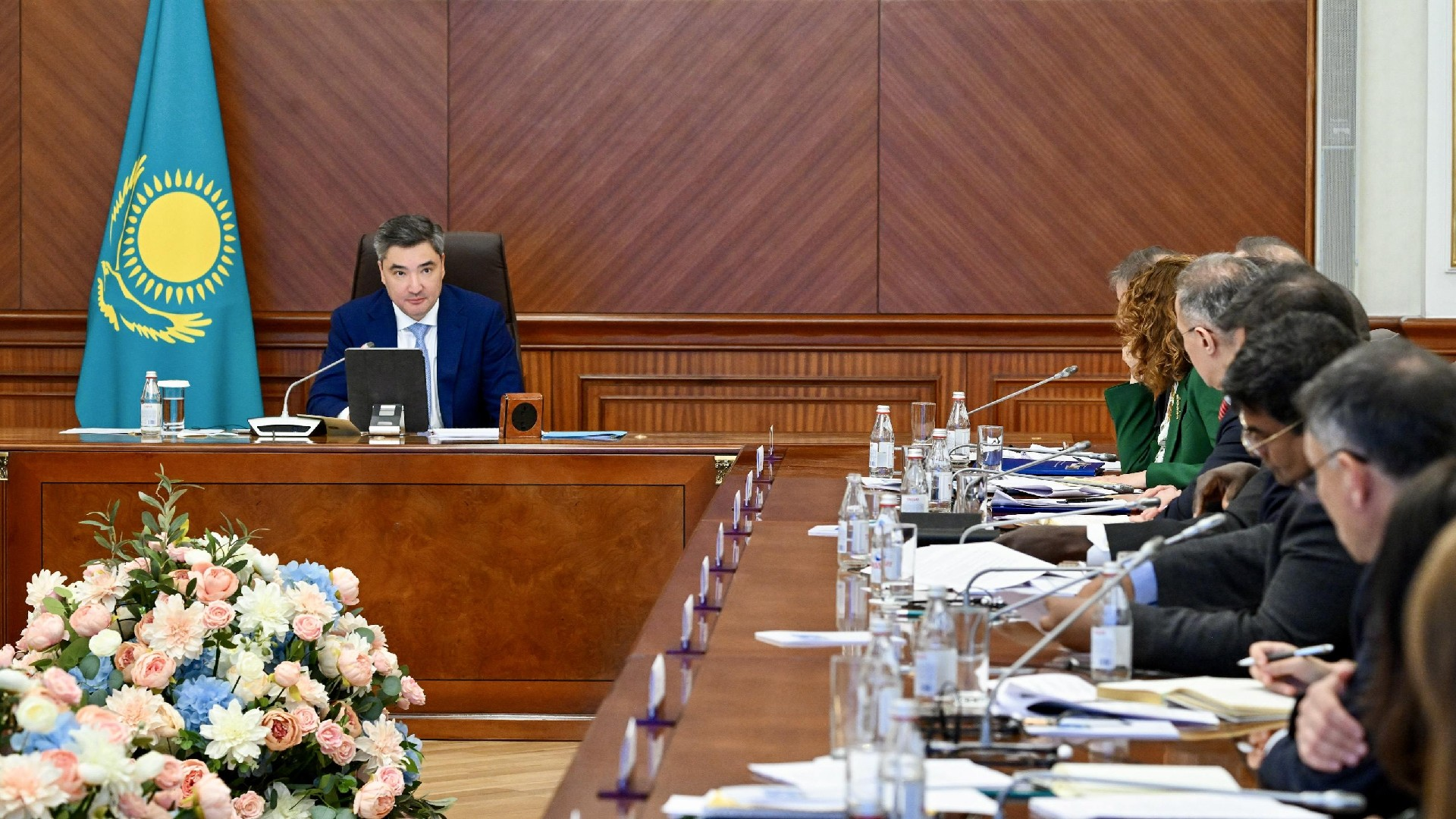
World Bank and Kazakhstan Discuss New Strategies to Boost Investment Inflows on May 18. Photo credit: PM’s press service.
Speaking during a May 18 government session in the Senate, the Parliament’s upper chamber, Vice Minister of National Economy Arman Kassenov said Kazakhstan outperforms most countries globally in several key investment metrics.
According to him, Kazakhstan’s gross capital formation stands at 27% of GDP, placing the country ahead of 75% of nations worldwide.
“By another metric, gross fixed capital formation as a share of GDP, Kazakhstan stands at 24%, which is higher than 68% of countries in the world,” he said, highlighting that these indicators create a foundation for maintaining strong economic growth rates in the coming years.
“At the same time, we intend to continue increasing investment volumes to strengthen the economy and improve citizens’ well-being,” he added.
According to Kassenov, investment in fixed capital accounts for 14% of Kazakhstan’s GDP, while the government’s target is to raise the figure to 23%.
New investment cycle
The investment figures were discussed days after Prime Minister Olzhas Bektenov held talks with World Bank experts in Astana on May 16 as part of a broader effort to implement what authorities describe as a new investment-driven stage of economic development.
The meeting included World Bank Regional Director for Central Asia Najy Benhassine, National Bank Chairman Timur Suleimenov, Presidential Adviser and Chairman of the Agency for Strategic Planning and Reforms Asset Irgaliyev, Deputy Prime Minister and Minister of National Economy Serik Zhumangarin and other senior officials.
Discussions focused on Kazakhstan’s transition toward a high-income economy, including measures aimed at boosting productivity, modernizing infrastructure, accelerating digitalization and expanding artificial intelligence and innovative financing tools.
Opening the meeting, Bektenov said President Kassym-Jomart Tokayev has made economic diversification and investment attraction one of the country’s central priorities.
“Competitiveness increasingly depends on the quality of economic policy, the speed of institutional change and the ability to create a predictable and attractive business environment,” Bektenov said.
According to him, Kazakhstan is building a comprehensive architecture for working with investors from strengthening external mechanisms for attracting capital abroad to improving domestic project support and investor rights protection.
“All measures being taken are aimed at increasing the incomes of Kazakhstan’s citizens and improving their quality of life,” he said.
Focus on productivity and technology
World Bank representatives positively assessed Kazakhstan’s economic reforms and investment attractiveness while emphasizing the need for deeper structural transformation.
Benhassine said Kazakhstan maintains strong investment appeal but noted that transitioning toward a high-income economy will require improvements in productivity and investment efficiency.
According to World Bank Lead Economist Christos Kostopoulos, Kazakhstan’s GDP growth remains comparable to several fast-growing economies.
“Using market mechanisms, companies should be encouraged to actively apply modern technologies, which in turn increases the competitiveness of the country’s economy,” he said.
Digital infrastructure projects also featured prominently in discussions. World Bank Digital Development Practice Manager Isabel Neto highlighted the importance of the planned Data Center Valley project in the Pavlodar Region, describing it as an initiative capable of strengthening Kazakhstan’s regional investment attractiveness.
According to officials, the project is expected to support the country’s ambitions to become a regional digital and AI hub.
Infrastructure and PPP projects
Transport infrastructure and public-private partnerships were also identified as key areas for future investment growth.
Shomik Raj Mehndiratta, the World Bank’s transport practice manager for Europe and Central Asia, outlined opportunities to attract additional foreign direct investment into airports, ports, railways, roads and urban transport systems.
Regional Manager for Central Asia at the International Finance Corporation (IFC) Michael Opagi stressed that public-private partnership projects must remain commercially attractive in order to unlock larger volumes of private capital.
Irgaliyev said Kazakhstan plans to further improve the structuring of PPP projects while drawing on international experience and World Bank practices.
“These instruments should be used to achieve strategic goals and create new infrastructure,” he said.
Government targets $20.5 billion investment momentum
According to Zhumangarin, Kazakhstan attracted $20.5 billion in investment in 2025, compared to $17.9 billion the previous year. The government’s current priorities, he said, include petrochemicals, gas chemistry, metallurgy, agricultural processing, tourism and pharmaceuticals.
Suleimenov emphasized that macroeconomic stability and inflation control remain essential conditions for attracting long-term foreign investment.
“For investors, a predictable macroeconomic environment and reduced inflation risks are critically important for ensuring sustainable returns,” he said.
Concluding the meeting, Bektenov instructed government agencies to incorporate the World Bank’s recommendations into Kazakhstan’s broader socioeconomic reform agenda.
“Sustainable economic growth today is impossible without active private-sector participation, a high-quality institutional environment, competition and innovation,” he said.