

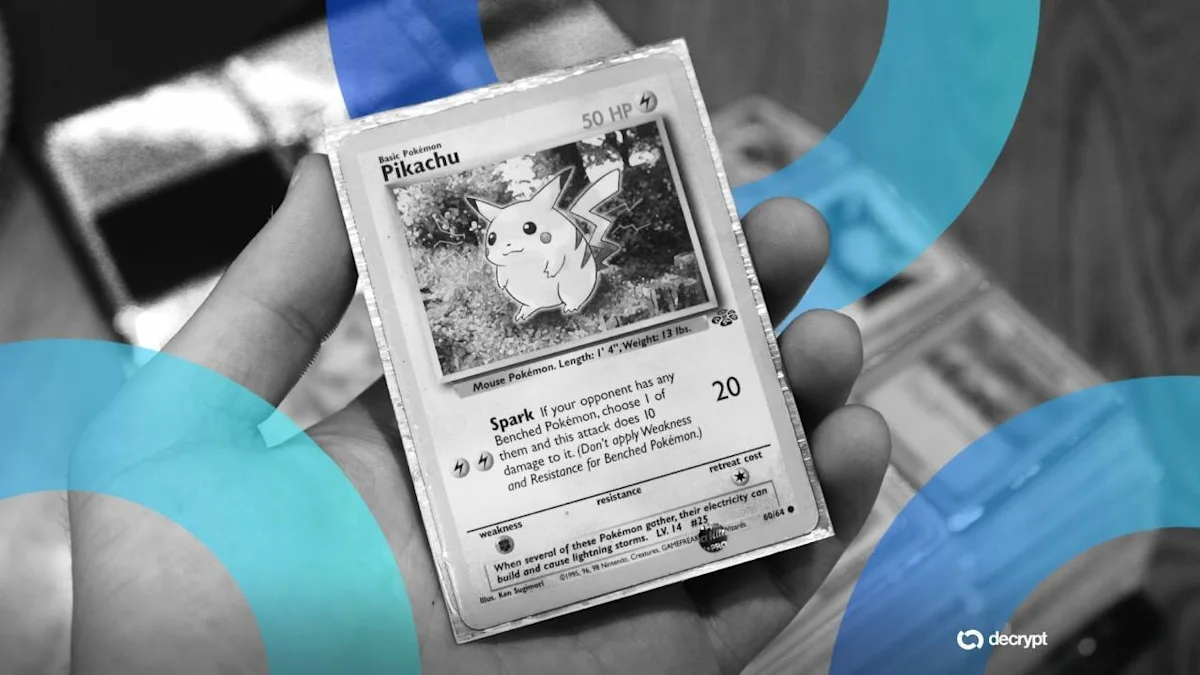
Somewhere in Montana, a trove of Pokémon cards sits behind locked doors, anchoring a multi-million-dollar crypto market within a 28,000-square-foot facility.
CEO Tuom Holmberg told Decrypt that since Collector Crypt debuted 18 months ago, the company’s vaulting facility has become core to its branding, amid a growing number of competitors that also offer tokenized versions of the popular playing cards.
“Out of these 30 other vibe-coded platforms that followed us, probably half of them keep their inventory in their closets,” he argued, referring to a string of companies that have debuted in response to surging demand for names like Pikachu, Charizard, and Gengar.
The global market for trading cards surged to $15.8 billion in 2024 and is expected to hit $23.5 billion by 2030, research firm Strategic Market Research estimated last year. As of Friday, the global market cap for NFTs stood at $2.4 billion, according to NFT Price Floor.
NFTs fetched billions during the pandemic-era crypto boom, and while demand for digital art and profile pictures has since cooled, the technology has re-emerged as an essential building block in supporting an air of speculation that’s engulfing trading cards.
Efficiencies aside, the technology still invites scrutiny, Holmberg noted.
“The biggest challenge that we face is walking into a card show,” he said. “You say, ‘Hey, we’re behind all of those tokenized cards on Solana,’ and 90% of the people are going to say, ‘That’s a fraud. That’s a scam. That’s a rug-pull.'”
Nonetheless, the firm’s marketing has leaned into the speculative fervor that helped influencer and wrestler Logan Paul fetch $16.5 million for a rare Pokémon card at auction in February.
A recent video shared by Solana‘s official X account highlighted the platform’s gacha machine, asking, “Would you spin for a $15,000 Pokémon card?”—a mechanism that Holmberg said echoes the traditional pack-ripping experience by spitting out random, card-backed NFTs.
The gacha gold rush
Dominic Jang, co-founder and CSO of Deadstock, another platform that offers tokenized Pokémon cards, told Decrypt that digital packs and gacha machines cater to speculators and collectors alike, who crave either “the rush and an instant exit” or the card itself.
“What’s genuinely new is that the pull now comes with instant liquidity,” he said. “Gacha and mystery packs look like a sales mechanic, […] but they’ve quietly become the on-ramp.”
Courtyard, which also specializes in NFTs tied to physical collectibles, announced this month that it had expanded the format to vintage U.S. coins. The platform also offers digital packs for other types of cards, as well as digital twins of luxury watches and comic books.
