

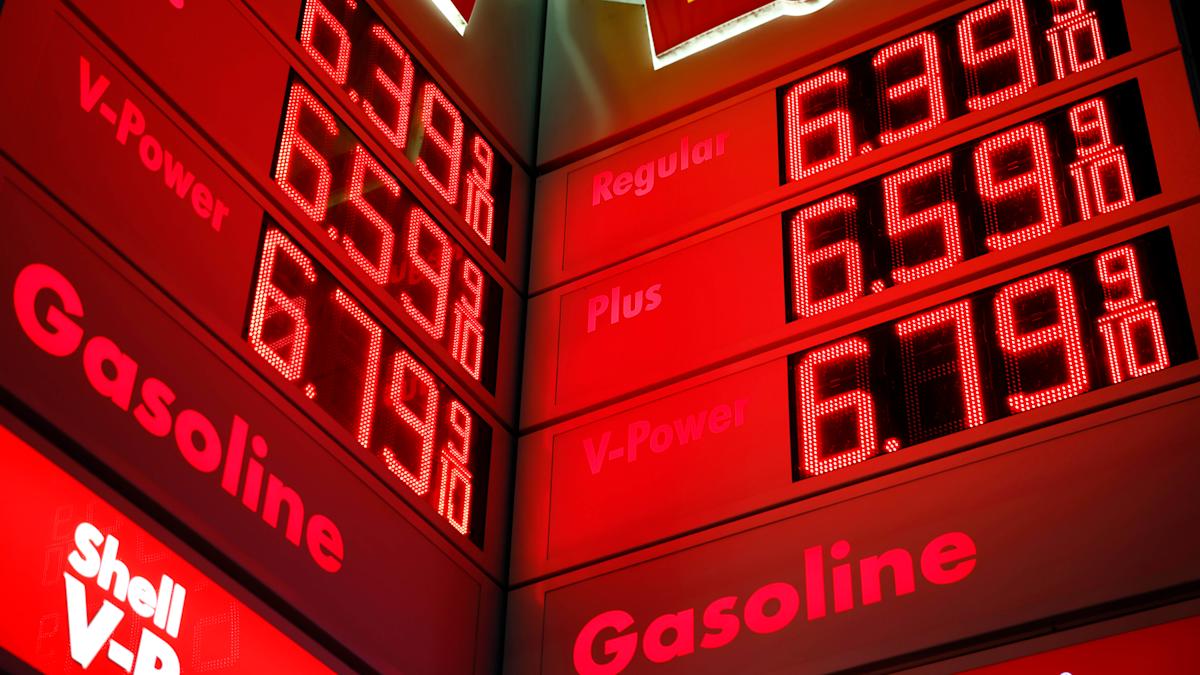
The US consumer has generally withstood $ 5 per gallon gas and accelerating inflation driven by the Iran conflict.
And it’s mostly thanks to a unique set of tailwinds that are likely to remain in place — for now.
The analysis: JPMorgan analyst Matt Boss said in a new note on Monday that consumer spending has been “consistent” despite headwinds from inflation.
“We note overall net wealth creation (not included in our proprietary wallet analysis) has represented in aggregate a $68 trillion tailwind vs. 2019 for the consumer (including $20 trillion of real estate gains, $35 trillion of stock market gains, and $13 trillion of other wealth), with the top 20% of consumers realizing ~$40 trillion of net wealth creation (or roughly two-thirds of the total increase),” Boss said.
He added, “Consumers are sitting on more excess cash/savings with aggregate US checking accounts increasing by +$5 trillion since 2019 to $6.48 trillion in 4Q25 (vs. $1.53 trillion in 4Q19 and which compares to a pre-COVID high watermark at less than $1.7 trillion).”
Recent first quarter earnings call commentary from discretionary consumer companies shows the $68 trillion tailwind is serving as a big buffer to consumers.
Royal Caribbean Cruises (RCL) said. “Based on our most recent research, our consumers remain very healthy, supported by excess cash, strong employment trends, and a continued preference for consuming experiences over purchasing things.”
On its call, Viking Cruises (VIK) cited a “temporary slowdown” for its river product post-Middle East conflict, which was followed by a recent “rebound” in demand.
Callaway Golf (CALY) and Acushnet (GOLF) both cited strong participation levels from US golfers, with rounds played up 5% year to date, and robust golf equipment demand, up 8% for Callaway and up 7% for Acushnet. There are no signs of pricing pushback across big-ticket golf clubs.
As for theme parks, Six Flags (FUN) reported strong in-park revenue per capita growth of 5.6%, including growth in food and beverage and in-park merchandise.
The challenges facing consumers: It’s not all sunshine and rainbows out there in consumer land, and even $68 trillion in wealth will be put to the test this summer with elevated inflation.
The April Consumer Price Index report revealed that annual inflation surged to 3.8% — its fastest pace in over three years — driven by a monthly 5.4% jump in gasoline prices and sticky shelter costs. Days later, the situation grew even more concerning when the Producer Price Index report delivered an upside shock, showing producer prices surged by 1.4% in April, pushing the annual rate to 6.0%.
