
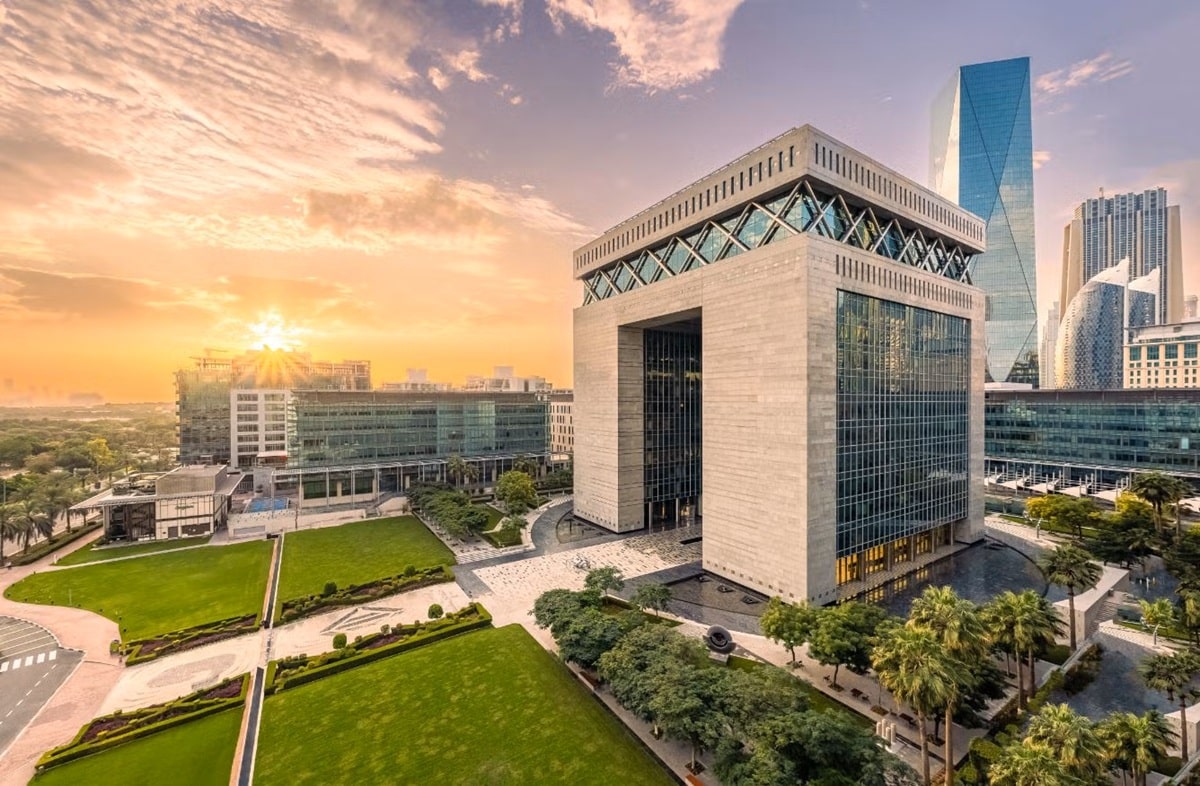
The financial hub said clients across banking, insurance, wealth management and innovation sectors remain committed to Dubai’s long-term growth outlook, citing the UAE’s regulatory stability, connectivity and business environment.
The announcement comes as Dubai climbed to 7th globally in the Global Financial Centres Index in March, marking the emirate’s highest-ever ranking.
DIFC said it continues to strengthen its position as a gateway connecting the Middle East, Africa and South Asia (MEASA) region with international capital markets.
Essa Kazim, Governor of DIFC, said: “Over the past few weeks, countries in the Middle East have been navigating a period of regional uncertainty together. During these times, the true strength of DIFC has been our clients and community.
Dubai International Financial Centre confidence
“What defines us is a shared belief in long-term opportunities that Dubai and the UAE offer to access the 77 markets across the Middle East, Africa and South Asia.
“Together, we are building the future of finance and advancing Dubai’s journey towards becoming one of the world’s top four global financial centres.”
Arif Amiri, CEO of DIFC Authority, said: “From global banks to FinTech disruptors, firms operating within DIFC say the current environment has not prompted retreat but rather reinforced the strategic importance of Dubai as a gateway to growth across the region.
“For many, the current environment serves as a reminder of why they chose DIFC in the first place: a stable and enabling legal and regulated framework, and globally connected platform capable of unlocking future growth.”
DIFC said its ecosystem now includes 290 banks and capital markets firms, including 17 of the world’s 19 global systemically important banks.

Banks optimistic in DIFC
Executives from Citi, Julius Baer and Standard Chartered highlighted Dubai’s role in supporting cross-border capital flows and regional connectivity.
Ebru Pakcan, Middle East & Africa Cluster and Banking Head at Citi, said: “At a time when geopolitical dynamics are reshaping markets, the ability to deliver cross-border solutions, maintain liquidity, and stay close to clients is critical. DIFC enables Citi to do exactly that.”
Regis Burger, Head of Middle East & Africa and CEO, Julius Baer (Middle East) Ltd, said: “The UAE has established itself as a leading global financial centre and the foundations that underpin that position remain firmly intact.”
Rola Abu Manneh, CEO, UAE, Middle East, and Pakistan at Standard Chartered, said: “The UAE entered this environment from a position of strength, supported by robust balance sheets, strong institutions, and a well-regulated financial system.”
DIFC said gross written premiums in its insurance sector have doubled to more than $4.2bn over the past four years.
Omar Gemei, Senior Executive Officer of Marsh DIFC and Head of Global Placement & Bowring Marsh, India, Middle East & Africa, said Dubai has become a major international insurance and risk management hub.
Dubai emerges as global wealth hub
Dubai also remains the Middle East city with the region’s highest concentration of wealth, while the UAE has attracted more millionaires in 2026 than any other country globally, according to Henley & Partners.
DIFC now hosts more than 500 wealth and asset management firms.
Peter Clark, Chief Executive Officer, Bentley Reid, said: “Very few – if any – in our HNW and UHNW network view current events as an existential threat to Dubai’s trajectory, or to their decision to make the UAE their home.”
ICICI Prudential Asset Management Company also confirmed confidence in Dubai after opening a DIFC office earlier this year.
Nimesh Shah, Managing Director and Chief Executive Officer of ICICI Prudential Asset Management Company, said: “Dubai and DIFC are a natural fit for ICICI Prudential AMC’s global ambitions given their strong regulatory ecosystem, global connectivity and access to institutional investors.”
DIFC also highlighted continued growth across digital assets and FinTech sectors.
FinTech opportunities
Ripple, which established its Middle East and Africa headquarters in DIFC in 2020, announced further expansion in Dubai this month.
Reece Merrick, Managing Director, Middle East and Africa, Ripple said: “The clarity and ambition of the regulatory frameworks that have been put in place, combined with a mature financial ecosystem and access to institutional capital, gives companies the confidence to lay solid foundations here.”
PropTech platform Stake and payments company Taptap Send also reaffirmed the importance of DIFC to their regional expansion strategies.
Manar Mahmassani, Co-Founder and Co-CEO, Stake said: “Today we are the largest fractional investment platform in the world because we started here.”
Michael Faye, CEO at Taptap Send said: “DIFC has been a genuine home for our team, our relationships, and our ambition.”
DIFC said the continued expansion of financial institutions, insurers, wealth managers and technology firms reinforces Dubai’s position as a resilient and globally connected financial centre capable of supporting long-term economic growth.
