
Fed divisions are grabbing attention, but future policy is heavily contingent on the situation in the Middle East, says Jeffrey Roach of LPL Financial.
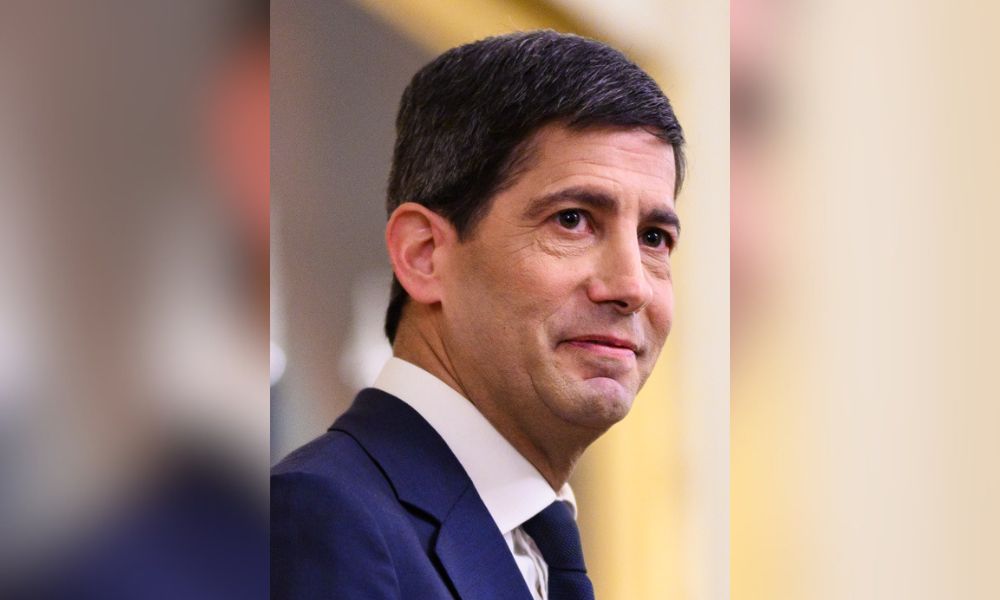
Advisors have been watching Kevin Warsh like a hawk since he became Federal Reserve chair in May for any hints as to a shift in the central bank’s recent policy on interest rates. But the re-escalation of tensions in the Middle East could be a big factor in the Fed’s rates strategy.
Last month the Fed kept to its path of keeping its policy rate steady at 3.5% to 3.75% in its first meeting with Warsh in the hotseat. The Fed made its last rate cut in December and Warsh’s predecessor Jerome Powell resisted pressure from President Donald Trump to cut rates.
During the press conference that followed the June Fed meeting, Warsh said that the central bank had a “good family fight” over interest rate policy. Minutes from the Federal Open Market Committee’s June meeting, released Wednesday, shed some light on the divisions that were at play. The minutes explain that “many participants indicated that the appropriate level of the federal funds rate would be within or slightly below the current target range at the end of this year.” However, many other participants “assessed that the appropriate level of the federal funds rate would be above the current target range at the end of this year.”
Participants noted that their future policy actions would depend on incoming information, according to the minutes.
Jeffrey Roach, chief economist for LPL Financial, says that there is some ambiguity in the minutes, suggesting several competing views on policy. However, one thing is certain, according to Roach: future policy is heavily contingent on the political situation in the Middle East. “If we can tease out any forward guidance from the minutes, it would be the committee is working through a wide range of scenarios and will not commit to a specific scenario until the incoming data provides necessary clarity,” he wrote, in a note Wednesday. “I don’t expect the committee to alter policy at the next meeting,” he added.
The conflict between the U.S. and Iran sent oil prices soaring earlier this year, and sparked market volatility. Tensions between the countries have escalated again after Iran was accused of striking three ships in the Strait of Hormuz and the U.S. launched strikes on Iranian targets. Speaking at the NATO Summit in Turkey Wednesday President Donald Trump said that a three-week old ceasefire between the countries is over and described the Iranian leadership as “scum.”
On Wednesday U.S. Central Command said that it has started conducting additional strikes against Iran “to further degrade their ability to threaten freedom of navigation in the Strait of Hormuz.”
Oil prices jumped Wednesday. Brent crude futures and West Texas Intermediate crude futures are both up more than 6%.
The Federal Reserve is also dealing with an inflationary environment that is hardly conducive to rate cuts.
The latest Personal Consumption Expenditures price index data, which is the Federal Reserve’s preferred gauge of inflation, rose 4.1% year-over-year in May, up from an annual increase of 3.8% in April, according to the Bureau of Economic Analysis.
The burden of inflation is wearing on consumers. According to the latest survey of consumer expectations released Tuesday by the Federal Reserve Bank of New York, households’ short- term inflation expectations hit a roughly three-year high, with median year-ahead expectations rising by 0.2 percentage point to 3.7% in June. Over three years, respondents expected inflation to hit 3.3%, the highest level since June 2022.
The FOMC minutes acknowledged the elevated inflationary environment. “Participants anticipated that inflation would remain elevated in the near term and then begin to decline as the effects of tariffs and energy price increases wane and other supply disruptions related to the closure of the Strait of Hormuz diminish,” officials said. “Participants judged that the risks to the inflation outlook were still tilted to the upside.”
However, the minutes are from the FOMC’s meeting on June 16 and 17, before the re-escalation of tensions in the Middle East. Set against this backdrop, advisors and their clients may have to brace for more market upheaval.
