

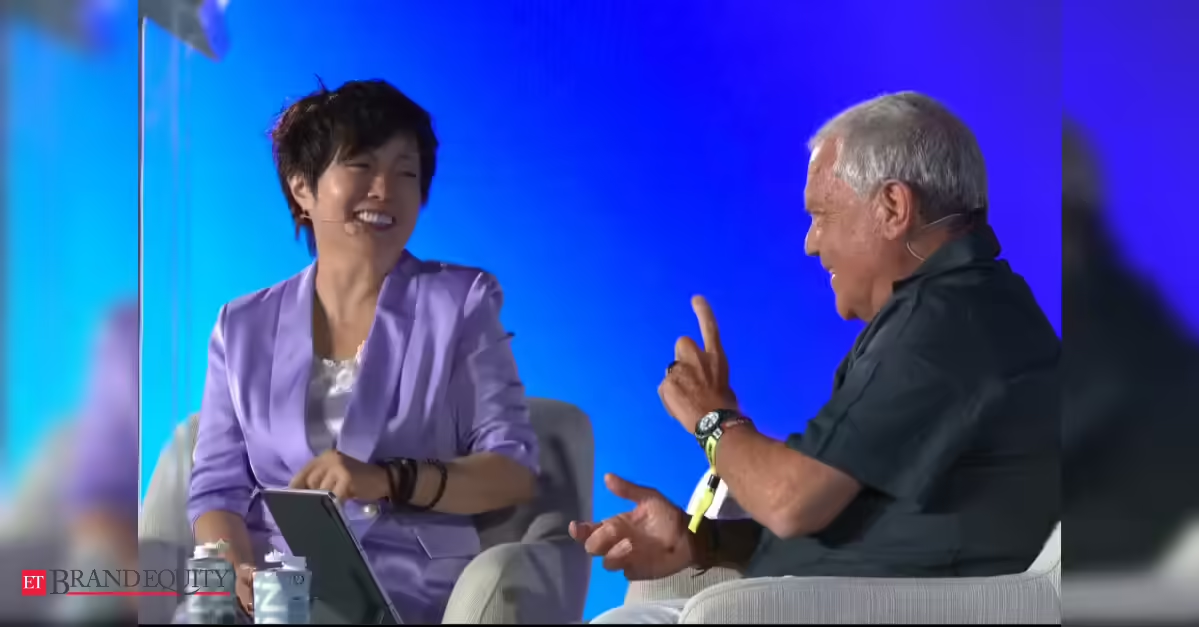
BYD plans to deploy artificial intelligence agents across its global sales and marketing operations, a move designed to generate hyper-localised content in minutes and accelerate its challenge to legacy automakers.
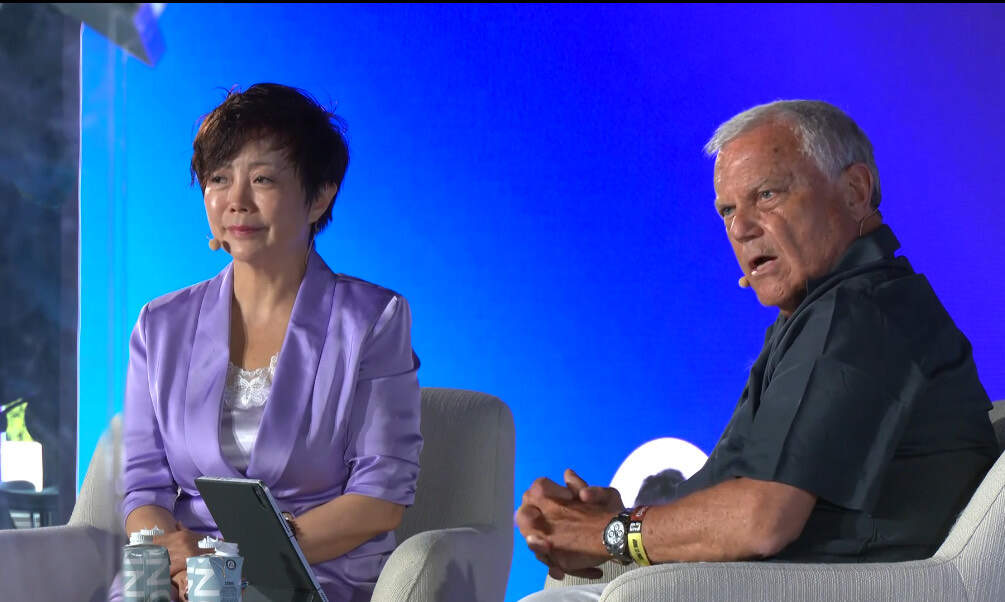
In a fireside chat with Martin Sorrell, executive chairman of S4 Capital, at the Cannes Lions festival, BYD executive vice-president Stella Li outlined a strategy to embed AI deep into the Chinese electric vehicle group’s consumer analysis and rapid-response marketing. The technological push comes as the world’s largest manufacturer of new energy vehicles navigates an increasingly hostile geopolitical environment, pivoting from a reliance on exports to localising its manufacturing footprint in Europe, Latin America, and the Middle East.
The automaker will utilise advanced AI systems to track consumer behaviour in real time, enabling regional teams to generate and distribute highly targeted promotional content within minutes. The technological push comes as the company navigates an increasingly fragmented macroeconomic environment, pivoting away from a reliance on direct vehicle exports from China toward deeply embedded regional operations.
The AI Marketing Strategy
The deployment of AI agents represents a fundamental shift in how the automotive manufacturer manages its brand presence across dozens of distinct territories. Rather than relying on traditional, slow-moving broadcast campaigns, the company is building an automated, rapid-response digital framework.
The strategy focuses on two core priorities: operational speed and cultural translation.
Rapid Content Generation: Regional marketing arms will be empowered to react instantly to shifting digital trends. If a particular topic or automotive trend gains traction online, localized teams can deploy tailored campaigns almost immediately.
Cultural Translation: AI systems will be used to translate complex engineering achievements—such as battery efficiency, torque, and horsepower—into tangible lifestyle benefits that resonate with local demographics.
For example, instead of presenting dense technical specifications to consumer segments unfamiliar with electric vehicle metrics, the automated systems will calculate direct cost savings. In the Middle East and parts of Europe, campaigns will contextualise fuel savings into regional purchasing power, such as the cost of a daily coffee or monthly household expenses.
“My plans are going to engage a lot of AI agents into my sales and marketing activity,” said Stella Li, BYD executive vice-president and CEO of the Americas, Europe, Middle East, and Africa. “With today’s AI technology, we can produce very high-quality content in ten minutes. If a topic is very hot, maybe in half an hour we can push out this kind of content.”
Global Manufacturing Overhaul
The acceleration of BYD’s digital capabilities mirrors a massive capital investment in physical infrastructure outside of China. As governments in the United States and Europe impose steeper tariffs on Chinese-built electric vehicles, the company is rapidly restructuring its supply chain to build cars closer to its primary consumer bases.
The company is establishing massive industrial footprints in key economic zones to circumvent protectionist trade measures and establish long-term market trust.
In Brazil, construction is underway on a major manufacturing complex designed to scale to an annual capacity of approximately 300,000 vehicles to create a Latin American hub. The facility is expected to create more than 20,000 local jobs, establishing a deeply integrated supply ecosystem within the region.
In Szeged, Hungary, the company is building its first passenger car factory in Europe. Matching the Brazilian facility with an anticipated annual capacity, the Hungarian plant will serve as a regional anchor for its European expansion, housing not only assembly lines but also dedicated research and development centers.
The automaker is also expanding its localised approach to specialised vehicle lineups across 92 distinct international markets, introducing plug-in hybrid electric vehicles (PHEVs) and battery electric vehicles (BEVs) tailored to regional driving conditions and infrastructure readiness.
Balancing Automation with Human Creativity
Despite the aggressive pivot toward automation and machine learning, the corporate strategy recognises clear boundaries regarding the role of AI in brand building. While automated agents will manage data analysis, media buying optimisation and real-time localised assets, the company maintains that high-end brand equity still requires human-led creative investment.
Establishing a premium market presence cannot rely entirely on algorithmic generation. To elevate international brand perception under its core philosophy, “Technology drives elegance”, the carmaker continues to back large-scale, human-driven creative productions to forge emotional connections with buyers. Recent high-profile physical campaigns have required traditional production crews numbering in the hundreds to establish a premium aesthetic that generative models cannot currently replicate.
The corporate objective remains focused on blending structural agility with absolute local fluency. By combining regional manufacturing hubs with automated, culturally specific digital marketing, the company aims to solidify its position as a dominant force in the global automotive transition.