

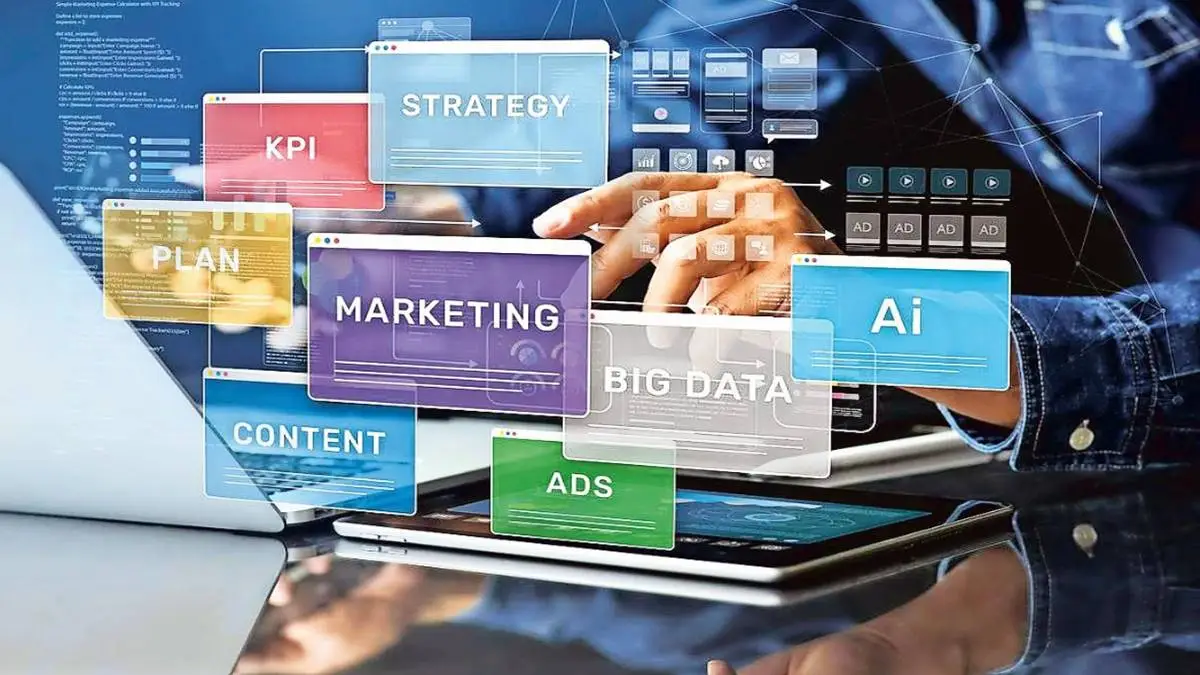
AI is changing the way businesses create their brand identity and engage with consumers, and how they market themselves, a bigger shift than AI being used just for analytics and automation. Today, for brands developing their storytelling, personalising their customer experience and engaging their customers, AI has become an essential part of their marketing process. In 2026, you can no longer consider AI-driven brand strategies as something that may happen in the future; rather, they will be an essential strategy for any company that aspires to have a competitive advantage within an ever-evolving digital marketplace.
Expanding role of sovereign AI across industries
Another emerging development shaping the AI ecosystem is the rise of sovereign AI, which focuses on building AI systems aligned with local data regulations, languages, and digital ecosystems. Its impact is especially visible across sectors where localised intelligence and regulatory alignment are critical. In e-commerce, AI enables conversational shopping experiences by assisting customers with product discovery and support. In education, AI-powered assistants provide interactive learning and personalised academic guidance. Within healthcare, AI helps users access medical information and basic service support more efficiently. In insurance, intelligent virtual agents simplify policy queries and claims assistance. The impact also extends to news and media, where AI enhances content discovery and enables conversational news experiences. In the energy sector, particularly oil and gas, AI supports faster access to operational insights and technical knowledge. Retail businesses are using AI to improve customer engagement through personalised assistance and order support, while telecommunications companies leverage AI to resolve service issues and manage customer requests instantly. Similarly, in travel and tourism, AI functions as a virtual guide for bookings and travel information. In banking and payments, AI-driven assistants help customers with account services, transaction queries, and financial guidance in regional languages, making digital financial services more accessible and efficient. In the defence sector, AI supports enhanced decision-making, intelligence analysis, automation, and faster access to mission-critical information. It can also assist advanced defence systems through intelligent monitoring, operational automation, and support for strategic command and control frameworks, including areas such as missile system management and defence operations coordination.
Accelerating creative production with AI
The use of AI will also change the way branding happens creatively. Creatives can make advertising copy, social media properties, images, and video ads in mere minutes with the use of generative AI platforms. According to statistics, over 90% of marketers state that using AI allows them to generate content quicker and more efficiently. This places an emphasis on brand marketing teams allowing them to develop more strategic and storytelling initiatives while generative AI handles more mundane production tasks. Generative AI platforms also allow marketers to conduct multiple tests of creative variations virtually at the same time and use real-time performance data for their optimisation of marketing campaigns.
The future of branding
With rapid advancements in AI technology, integrating AI into brand strategy is quickly becoming a core component of modern marketing. Industry studies indicate that over 80% of marketers are already leveraging AI in some capacity, while organisations that adopt AI-driven marketing strategies have reported productivity gains of up to 40% and significant improvements in customer engagement and personalisation. As AI continues to reshape how brands connect with consumers, businesses that combine the power of intelligent automation with authentic human creativity will gain a decisive competitive edge enabling them to build deeper audience relationships and stand out in an increasingly dynamic global marketplace.
The author is the founder & CEO, CoRover.
