

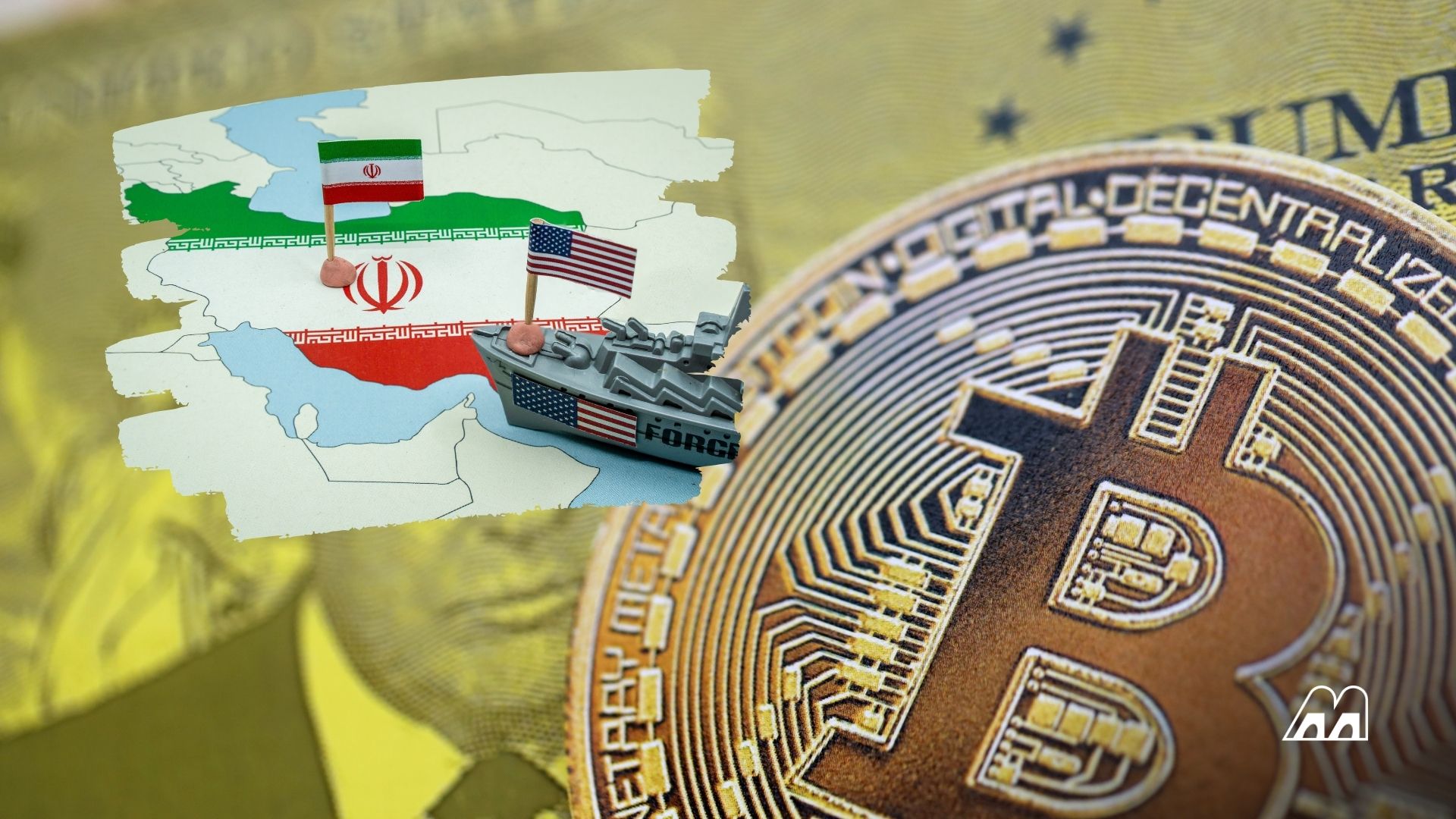
Bitcoin just did something nobody expected: it went up while the Middle East lit another fuse. On June 11, 2026, Iran closed the Strait of Hormuz. That’s a narrow waterway carrying around 20% of the world’s oil. On the same day, US inflation data came in hotter than it’s been in nearly four years. Normally, that combination sends risk assets like Bitcoin running for cover. Instead, BTC climbed back above $63,000 and even touched $64,300. Here’s what happened, and why crypto traders aren’t panicking just yet.
Bitcoin Climbs to $64,000 Despite Two Big Shocks
Data from TradingView showed BTC/USD hitting local highs of $64,300 on Bitstamp, up more than 3.2% on the day. That’s a meaningful bounce. Especially given the headlines competing for traders’ attention.

Reports referred to Iran closing the Strait of Hormuz “until further notice” following attacks on US infrastructure in the Gulf states. The Strait of Hormuz sits between Iran and Oman. Ships use it to move oil and gas out of the Persian Gulf. When it’s threatened or shut, oil prices tend to spike fast. There’s no easy detour for that much crude.
And spike it did. US WTI crude oil jumped above $91 per barrel following the news. That’s a sharp move in a single trading day. However, shortly afterwards, it fell by 8%, a dizzying reversal in oil prices, currently fluctuating at 84.28 per barrel.

It’s also the kind of shock that usually spills into stock markets, bond yields, and crypto, too. And it reflects the instability of financial markets surrounding the current geopolitical conflict.
Trump’s Warning Adds to the Tension
President Trump didn’t calm things down either. He warned that Iran would be hit “very hard” on Thursday evening. In a post on Truth Social, he said the US would eventually take “Kharg Island, and other oil infrastructure points, and assume total control of their Oil and Gas Markets”, comparing it to the US relationship with Venezuela. The day before, Trump had stated that Washington controls Hormuz, with around 100 million barrels of oil transiting as a result.

(Trump posted on Truth Social)
So Bitcoin had every reason to drop. It didn’t. This resilience echoes what we saw when Bitcoin fell below $63,000 as the Iran-Israel conflict first reignited earlier this month. The market seems to be getting used to these headlines. It’s not panicking every time one drops.
Why US Inflation Numbers Are Adding to the Pressure
It wasn’t just Iran. The US also dropped a rough inflation report on the same day.
The Bureau of Labor Statistics confirmed that year-on-year, the Producer Price Index (PPI) was up by the most in nearly four years. PPI measures how much it costs businesses to produce goods and services. When it climbs fast, it often means higher prices for consumers down the road. According to the official release, “For the 12 months ended in May, prices for final demand less foods, energy, and trade services moved up 5.1 percent, the largest 12-month rise since jumping 5.5 percent in October 2022”.

This came one day after another inflation report. On Wednesday, the May print of the US Consumer Price Index (CPI) came in at 4.2% year-on-year, its highest rate of increase since April 2023. CPI tracks prices that everyday consumers actually pay. A jump here hits wallets directly.
What’s Really Driving Inflation Higher
What’s pushing both numbers up? Energy costs, mostly. That ties straight back to the oil story above. “The energy index increased 23.5 percent for the 12 months ending May,” the BLS reported.
High inflation usually makes investors nervous about risky assets. It raises the odds that interest rates stay high for longer. That’s normally bad news for Bitcoin. But Bitcoin didn’t seem to care this time, at least not on this particular day.
What Traders Are Watching Now: $63,300 and the CME Gaps
So where does this leave Bitcoin’s price? According to one trading firm, the market is stuck between two competing fears.
Trading company QCP Capital described the situation in a Market Color bulletin. It said markets were “being forced to price both military escalation risk and potential energy disruption risk at the same time”. The firm added that “that combination leaves risk assets in an awkward position” and noted, “Investors may not be panicking, but they are clearly less willing to lean into exposure when the next headline could pull the market in either direction”.
Crypto trader and analyst Michaël van de Poppe shared a more technical take. He posted on X that “It’s quite simple for Bitcoin. Break through the areas at $63.3K and $65.8K, and we’ll be looking at a lot more upside.”
It’s quite simple for #Bitcoin.
Break through the areas at $63.3K and $65.8K and we’ll be looking at a lot more upside.
I’d have targets at $75K and $79K (CME Gaps) if that’s the case.
As long as it stays under these levels, there’s less conviction, meaning that it’s hard to… pic.twitter.com/vntyyofNgc
— Michaël van de Poppe (@CryptoMichNL) June 11, 2026
If you’re new to crypto charts, here’s a quick translation. $63,300 and $65,800 are “resistance” levels. These are price points where Bitcoin has struggled to push higher before. If it breaks above both, it signals buyers are firmly back in control.
The Bigger Target: CME Futures Gaps
Beyond those near-term levels, van de Poppe’s targets align with CME futures gaps. CME (Chicago Mercantile Exchange) is where big institutions trade Bitcoin futures. When CME is closed over weekends, but Bitcoin keeps moving on regular crypto exchanges, it leaves a “gap” on the chart. Traders often expect the price to fill that gap eventually.
Van de Poppe’s targets matched the outstanding CME futures gaps between $75,000 and $80,000, should price manage to break higher. That’s a much bigger move. It would only really happen if the current $60,000 support zone holds firm.
For now, the focus stays on holding ground. It’s a tense moment for crypto, with oil prices, war headlines, and inflation data all colliding at once. Whether $64,300 turns into a real breakout or just a brief bounce will likely depend on what happens next in the Gulf. The Federal Reserve’s next move could also give risk assets more room to breathe.
FAQs
What is the Strait of Hormuz, and why does it matter for oil prices?
The Strait of Hormuz is a narrow waterway between Iran and Oman that connects the Persian Gulf to the open ocean. Roughly a fifth of the world’s oil and a huge share of global liquefied natural gas pass through it daily. Any closure or threat to the route tends to push oil prices sharply higher, since there are very few alternative shipping paths for that much fuel.
How does rising US inflation typically affect the crypto market?
Higher inflation often pushes investors to expect that central banks like the Federal Reserve will keep interest rates elevated for longer. That makes borrowing more expensive. It tends to push money out of riskier assets, including stocks and cryptocurrencies, and into safer options like cash or short-term bonds.
What are CME futures gaps, and why do traders track them?
CME (Chicago Mercantile Exchange) runs a regulated Bitcoin futures market that closes on weekends. If Bitcoin’s price moves a lot while CME is shut, a price “gap” appears on the futures chart once trading resumes. Many traders believe price tends to “fill” these gaps eventually, so they use them as potential future price targets.
Why does Bitcoin sometimes rise during geopolitical conflicts instead of falling?
While Bitcoin often falls alongside other risk assets during sudden shocks, some investors view it as a hedge against currency devaluation or government instability over the longer term. Reactions can also depend on how “priced in” a piece of news already is. If traders expected worse, even bad news can trigger a relief bounce.
What’s the difference between CPI and PPI, and why do both matter?
The Consumer Price Index (CPI) measures price changes that everyday shoppers experience directly, like groceries and rent. The Producer Price Index (PPI) tracks the prices businesses pay for goods and services before they reach consumers. A rising PPI often signals that consumer prices (CPI) could climb further in the months ahead, since businesses tend to pass higher costs on to customers.
