

Key Takeaways
- Call money must be repaid immediately when demanded by the lender.
- Brokerage firms use call money to support margin accounts.
- The call loan rate can change daily, impacting interest costs.
- Call money is highly liquid, aiding banks in balance sheet management.
- Short-notice money offers a repayment period of up to 14 days.
What Is Call Money in Banking?
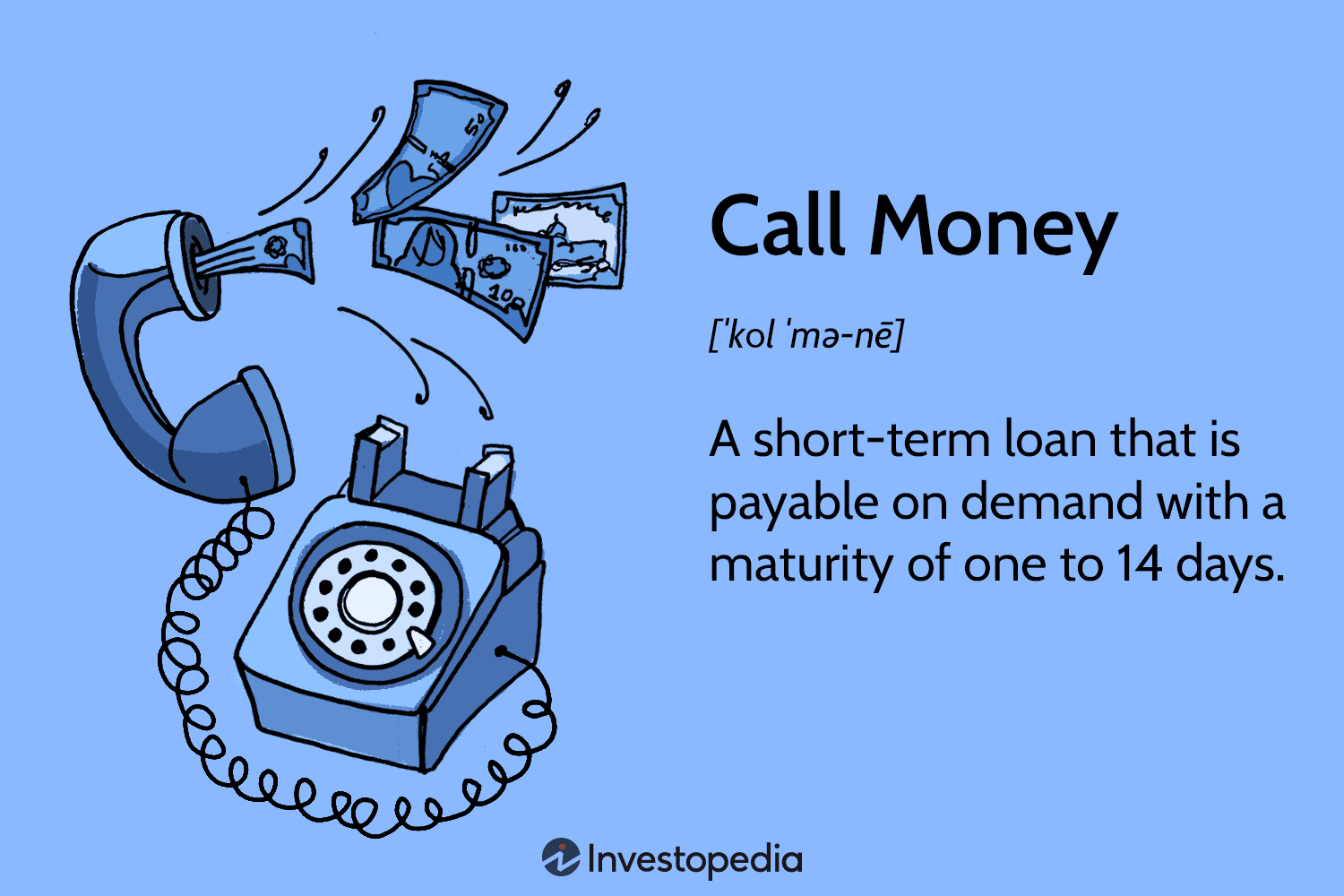
Call money is a short-term loan that financial institutions use to manage surplus funds and maintain liquidity. They are unique because they must be repaid immediately upon the lender’s demand, with no fixed repayment schedule. Call money is commonly used by brokerage firms to finance margin accounts and facilitate smooth trading operations. Its high liquidity helps financial institutions adjust their short-term funding needs while playing a key role in the money market and balance sheet management.
How Call Money Operates in Finance
A financial institution lends call money, which is a short-term, interest-paying loan, to another institution. Due to the short-term nature of the loan, it does not feature regular principal and interest payments, like longer-term loans typically do. The interest charged on a call loan between financial institutions is referred to as the call loan rate.
Brokerages use call money as a short-term source of funding to maintain margin accounts for the benefit of their customers who wish to leverage their investments. The funds can move quickly between lenders and brokerage firms. For this reason, it is the second most liquid asset that may appear on a balance sheet, behind cash.
If the lending bank calls the funds, then the broker can issue a margin call, which will typically result in the automatic sale of securities in a client’s account (to convert the securities to cash) to make the repayment to the bank. Margin rates, or the interest charged on the loans used to purchase securities, vary based on the call money rate set by banks.
Pros and Cons of Call Money in Banking
In money markets, call money is important for managing funds short-term, facilitating reversible transactions, and balancing sheet management.
Using call money helps banks earn interest on their surplus funds. On the counterparty side, brokerages understand that they are taking on additional risk by using funds that can be called at any time, so they typically use call money for short-term transactions that will be resolved quickly.
Transaction costs are low as the process occurs directly between banks, without a broker. It helps to smooth the fluctuations and contributes to the maintenance of proper liquidity and reserves, as required by banking regulations. It also allows the bank to hold a higher reserve-to-deposit ratio than would be possible otherwise, allowing for greater efficiency and profitability.
Fast Fact
The call money rate can be found under “Money Rates” in The Wall Street Journal.
Call Money vs. Short-Notice Money: A Comparison
Call and short-notice money are similar, as both involve short-term loans between financial institutions. Call money must be repaid immediately upon the lender’s call. In contrast, short-notice money is repayable up to 14 days after notice is given by the lender. Short-notice money is also considered to be a highly liquid asset, trailing cash and call money on the balance sheet.
How Does a Margin Account Work?
A margin account is a brokerage account that allows an investor to use cash or securities held in the account as collateral for a loan to purchase an investment. Margin refers to the money borrowed and is the difference between the total value of an investment and the amount of the loan. If the investment suffers a loss, the investor may be subject to a margin call, which means that the securities bought will be liquidated.
What Are Call Loan Rates?
The call loan rate is the short-term interest rate charged on a call loan between financial institutions. The rate typically changes daily and is published in The Wall Street Journal. Banks require money at call funding when the difference between their rate-sensitive assets and liabilities creates a gap in available funds.
Are Call Money and Money at Call the Same?
The terms “call money” and “money at call” mean the same thing. They both refer to short-term loans that a borrower has to pay back in full whenever the lender requests.
The Bottom Line
Call money is a short-term loan used in the money market that helps financial institutions manage liquidity reserve ratios and short-term funding needs. Banks earn interest on surplus funds through the call loan rate, while brokerage firms use call money to support margin accounts and trading operations.
Because these loans can be recalled at any time, they provide high liquidity but also create risks for investors using margin, since falling asset values can trigger margin calls and forced liquidations. Unlike short-notice money, call money is repayable upon demand.
